ip location

How Can I Change the IP Location in Browser?

Nowadays information and network technology develop very rapidly, almost everyone has a computer with Internet access in their home. The Internet is changing our life. In the online world, computers represent us as individuals. When your computer is exposed to the Internet, all your information is at risk of being exposed.

In the process of using Internet products, your photos, account numbers, mobile phone information, and other personal information may be obtained or even used by others without your own awareness.

Among these, the IP address is also very important private information. An IP address is like your address in the network environment. If your IP address is exposed in the network, then everyone knows where you live and where you access the Internet from.

So if you’ve been worried about your privacy? Have you searched a lot of information but still don’t know how to change your IP location? If so, then this article is perfect for you!

In the following sections, you will learn:

  • What does an IP address have to do with location?
  • How often does IP address change?
  • What caused my IP location to leak?
  • How can I change the IP location in my browser?
  • What is the best product to change IP location?


Why need to change IP location

Does IP address change with location?

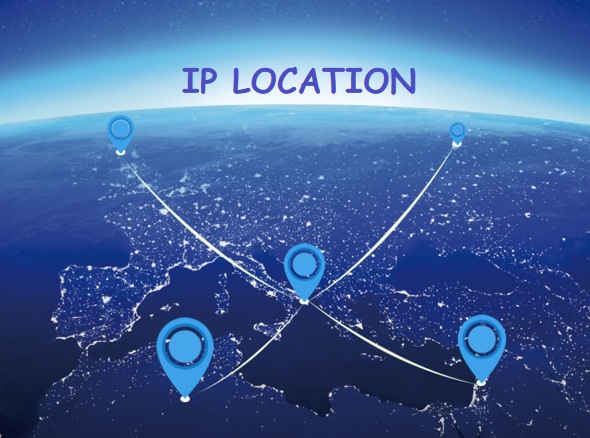
The change of IP address is closely related to the change of geographical location.

This is because different areas mean different base stations and LANs. The base station is the public mobile communication base station, which is the interface device for mobile devices to access the Internet. When your geographic location changes dramatically, chances are you’re already in range of other LANs, or even other base stations. Then your IP address will change to a completely different number. This is called the IP address changes with geographical location.ip location
In fact, when you are in a small area, even though you are not far away, you will notice that your IP address number changes. This is not because of a base station change or a network error, but because the IP you are using is a dynamic IP.

Dynamic IP is when the carrier randomly assigns an IP address to you every time you go online. A static IP address is a fixed one. A static IP address is a permanent address assigned to a device, while a dynamic address is a temporary address that changes frequently.

We usually use dynamic IP addresses when surfing the Internet. Dynamic IP addresses are constantly changing. Each time the device connects to the network, the DHCP server provides a dynamic address, and the assigned IP address is very unlikely to be the same.

Specifically, when you dial-up to get online, you’re assigned an IP address. When you go offline, the IP address is returned to anyone who comes after you. That gives him the I.P. address you just used. When you go online again, the server will give you an IP that someone else just returned.

Several users in an area take turns using IP addresses in those LANs.

Dynamic IP is generated because IP resources are scarce. Dynamic IP alleviates the problem of too many users by taking advantage of time differences.

Of course, dynamic IP can also meet our Internet needs, but also to some extent to protect privacy. For example, if you post a message on some platform, the next time the IP is restarted, it will change and no one will know that you posted the message.

How often does IP address change?

If you are using DHCP, your IP address may be updated every 14 days. Because every two weeks DHCP will update.

In addition, the retention period of IP addresses is also related to regions. In some regions, IP addresses can be retained for nearly a month, while in others, IP addresses can be retained for less.

What is your IP location used for?

If you read the previous section, you should know that IP addresses are private. But what kind of harm will IP address leakage bring to us? What will your IP location be used for?

  • Harm to personal safety

The network “tags” your computer with IP addresses. When you use this IP address to access the Internet, the network will use this IP address to locate the computer’s activities. If you browse through some high-value items, criminals may be able to retrieve your IP address based on your whereabouts. In any case, when the virtual world intersects with the real world, one’s own safety cannot be guaranteed.

  • Form a self-portrait

This is based on the fact that IP can reveal your geographical location. If an IP address tells the network where you are, your movements throughout the day can be tracked precisely.

For example, you went to park A for A jog in the morning (using IP-A), then went to work in A building on Street B (using IP-B), liked to go to restaurant C for lunch (IP-C), and went to Mall D (IP-D) in the afternoon, etc. Ip-ABCD corresponds to some ranges and locations respectively, and these data can be recorded.

When your trajectory is regular, the network will feature extraction and modeling analysis of your basic attributes, spending power, interests, hobbies, and career information, so as to build user portraits.

  • Harm to business orderHarm to business order

Is IP address exposure a risk for the business?

There are! And the impact is huge!

Common attacks on the Internet are based on IP addresses. Especially in finance, gaming and highly competitive business types, the impact of IP address exposure on business can be immeasurable. There have been a lot of hotel operation data leaks, there are also a lot of digital currency platform attacks and so on, these are the consequences of IP address exposure.


Change IP location in different browser

If you already have a new IP address that covers you, then you can change it to your browser and change your IP location!

1) Chrome

Open Chrome and click on the three vertical dots in the upper right corner to open the menu.

Click “Settings” to enter the Settings TAB. Find the “System” option from advanced Options Settings, click and open.

The system TAB has the option “Open agent Settings for your computer”. Click on the Launch PC Agent Settings screen and set your IP from there.

2) Firefox

Open the Firefox browser and find “Options” from the menu bar.

Open the Advanced TAB and click Network Options. You can manually enter the IP address in the Connection window.

3) Microsoft edge

Open Microsoft Edge and go to Settings options.

Look for “Network and Internet” in Settings and you will see “IP Assignment”. Click Edit. Under the IP address editing option, select Manual to configure the IP address manually. After that, all you have to do is enter the IP address, subnet mask, and gateway information.


The best product to change IP location

1) Virtual browser

Didn’t you find an IP address you could use to change your IP address? Still can’t configure the IP address in the browser? If so, using a virtual privacy browser might be a good choice!

Privacy Browser, as its name suggests, is dedicated to protecting users’ privacy. But what’s so amazing about it? Let’s take ClonBrowser as an example.

2) ClonBrowser

ClonBrowser is both a private browser and a virtual browser. It protects all your private information and helps you manage countless accounts!

ClonBrowser takes user privacy very seriously! To keep your privacy safe, it does the following:

  • Allows you to change your IP address at will

ClonBrowser integrates with major proxies to provide you with very secure IP addresses! Through the proxy, you can switch to any IP address anywhere in any country! All these agents like 911 are available!

  • Protect your browser fingerprint

ClonBrowser provides a “mask fingerprint” when the web tracks your browsing fingerprint. Your real fingerprints are hidden behind the mask, never recorded by anyone.

  • Isolation protects the data for each profile

In ClonBrowser, your cookies and various caches are also kept separate from each other, and no one can mess with them.ClonBrowser
In addition to security, ClonBrowser has powerful account management capabilities and team collaboration. You can create countless profiles on ClonBrowser to manage all your accounts, and if you want to share them with your team, you can do so with a convenient sharing feature.

Don’t you want to experience the wonders of ClonBrowser for free? A secure browsing environment and friendly service team are waiting for you!


privacy

IP | The Best Browser that Hide IP Address!

Did you know that your IP address is no longer a secret? An IP address is a logical address assigned to you by the Internet when you go online, which makes up for the difference between physical addresses. If you are struggling with THE problem of IP leakage, if you are also looking for a browser that can hide IP addresses, then this article is for you, it will give you a variety of options!

In this article you will know:

  • Why do you need a browser that can hide IP
  • How can I hide my IP manually
  • What is the best browser that can hide IP?


Why do you need a browser that can hide IP addresses?

Why do I need to hide the IP address?

1) For personal safety

Hiding IP addresses protects the privacy and prevents malicious monitoring and abuse of your personal information.

Every time you visit a site, the target site records your IP address and combines it with all the other types of data it monitors to form a permanent portrait of you. That data includes, but is not limited to: your browsing habits, what you click on, how much time you spend on a particular page.

That data is then sold to advertising agencies, which use it to tailor ads to you. That’s why when you see an AD you feel good but you feel like you’re being monitored.privacy

If you care so much about your location that you turn it off, you’re not safe. Because your IP address also gives away your location. Even though an IP address doesn’t contain a home address or name, it’s easy for anyone with access to your ISP customer data to find you. Anyone can do it.

Trust me, social media networks actually study your data! Then combine the data with the ads, all in an effort to make the ads seem more seductive. They know your data even better than you do! They track your online activity on the platform, analyze your browsing behavior and spending preferences, and then serve you targeted ads.

Internet service providers (Comcast, Verizon, etc.) collect information about you. Although all providers promise users that they will not sell their data, the high return for advertisers is a lot of money.

For many users, it’s either being watched or not being online at all.

2) To break through regional limitations

In some areas, the government prohibits certain content or activities because of different policies.

But if you want to conduct network activities (legitimate business activities, etc.) in that area, you actually need to make some changes to the IP address.

If you can hide your real IP address and make it look like you’re browsing from another area, you can get around these restrictions and view blocked sites. Private companies also often geolock their content, making it unavailable in certain areas.

This happens a lot with YouTube, where some countries, such as Germany, completely block copyrighted content instead of using YouTube’s profit model.

Do you want to travel abroad? But some of your favorite websites and apps may not work. If you need to watch domestic videos while abroad but cannot watch domestic dramas due to regional restrictions, you have to switch to a domestic address to watch the videos. Therefore, if you want to access these videos and other platforms from abroad, you need to hide your IP address. By hiding the IP, local ISPs can’t see the final destination of the data and can’t restrict the video sites you visit.

Does a private browser hide IP addresses?

If I use a private browser, which promises to protect my private information, am I really safe?

Maybe.

First of all, you need to know what private information is. Private information refers to all private information about one’s safety and independence. When surfing the Web, this information can be browsing history, account passwords, browser fingerprints, IP addresses, etc.

Take, for example, cookies, which are part of a browser fingerprint. I believe the following things must have happened to you. You log into your community account on a browser, close the browser after the community event, and the next time you return to your community, your account is still logged in. This is where cookies come into play. A Cookie is a cached file stored locally on your computer that contains browser data that can track your messages. If you want to avoid the security risks brought by cookies, you can find it in the computer to delete, you can also use the privacy browser mentioned above to shield cookies.

Privacy browsers do protect some browsing activity. They prevent you from creating traces as you browse, which can prevent targeted advertising. Your browsing history, passwords are not remembered, and websites cannot identify you without identifying your past browsing habits.

But this is an ideal situation. Even if you block this, the web can still figure out who you are based on your IP address, because private browsers can’t hide your IP address. Your private information is not fully protected!


How can I hide my IP address manually?

1) Reconnect

IP addresses can be rotated. IP address rotation is a process in which IP addresses are randomly assigned to devices or at a predetermined interval. When you connect to the Internet, the IP address is automatically extracted from the IP address pool. In the event of disconnection or reconnection, the ISP will assign the next available IP address, which is highly unlikely to be the one you just used.

IP addresses are rotated because there are more users than actual IP addresses. Therefore, when a user disconnects, this IP address goes back to the IP address pool, ensuring optimization of existing resources.

So, when you want to hide an IP address, it’s a good option to disconnect and reconnect to the network manually. The downside of this approach is that your IP range doesn’t vary much and you still can’t access networks in restricted countries.

2) Use public WIFIwifi

This is an option that would have been taken in the absence of a better solution.

One way to avoid being found in a chase game is to hide in the crowd. Hiding IP addresses also applies this principle.

When you use public wifi instead of the IP address assigned to you at home, you’re hiding in the crowd. Public wifi is used by millions of people every day with different browsing habits, making it impossible for networks to tell which browsing habits are yours.

It’s easy. All you have to do is find a public wireless network that you can connect to and join it. However, the defects are also very obvious, for example, the public network generally only appears in public places, the use of location is relatively limited. For example, it doesn’t help you break the rules.


The Best Browser that Hides IP Address

Since the privacy browser can only help us block certain private information, what other products can help us hide IP addresses?

Don’t give up hope, there is!

ClonBrowser can help you hide IP addresses and protect your private information!

ClonBrowser is a new but very popular virtual browser. It supports multi-account management, resists network detection, and prevents browser fingerprint leakage!ClonBrowser

First, ClonBrowser is a browser that protects your privacy. Cookies, caches, and other data in your configuration files are well protected. When other servers want to capture your browser fingerprint for analysis, ClonBrowser provides them with a “mask fingerprint” so that your real information is not visible to the outside world.

ClonBrowser also provides an answer to the much-discussed problem of hiding IP addresses. ClonBrowser is integrated with all major proxies (911, etc.) so you can hide your IP address from the proxy service.

Second, ClonBrowser is also a browser that supports multiple accounts synchronization and teamwork. In ClonBrowser, you can have an infinite number of profiles to manage your multiple accounts across platforms and share them with your team.

Third, ClonBrowser also has an excellent free trial program and a backend service team to make it worth your while!

VPN | How to Hide IP Addresses?

How does a VPN hide your IP address?

Is hiding IP address illegal?

Not at all. Hiding IP address information is not illegal. On the contrary, it deserves to be advocated. Because this can be a very important part of protecting your privacy!IP address

With the development of the Internet in the world, the security of privacy has become a topic for enterprises and individuals to worry about. And IP addresses are likely to be a breakthrough in exposing privacy on the Internet.

From the point of view of enterprises, the development of economic globalization has made many enterprises’ businesses all over the world. Such a situation urges enterprises to no longer stick to one office, and to set up offices, branches, factories and other branches in other places has become the new normal of enterprise expansion.

At this time, the enterprise network technology developed based on LAN and WAN technology has become very important, it has become an important infrastructure to connect enterprises, institutions, and all departments and exchange information with the outside world.

But with the large-scale use of enterprise networks, enterprise network security is particularly important. Protecting and hiding enterprise network IP addresses is a good choice. Because IP address leakage may cause trouble and economic loss for the company not to graduate.

Not only enterprises but also individual users need to hide IP addresses when they use the network. It is believed that no one would like to know the location of their devices and networks by strangers, which can bring great insecurity to people.

Let’s summarize why IP addresses should be hidden, generally speaking, there are three aspects:

  • Protect devices and networks from attack.
  • Hide your location to keep you safe. (IP addresses provide details about you, such as your location)
  • Reduce shielding. (IP addresses contain a lot of data, and hiding them can reduce the chances of being blocked by websites.)

If you need to hide your IP, maybe using a VPN is a good option.

How does VPN hide IP addresses?

A VPN is a Virtual Private Network. As the name implies, a virtual private network can be understood as a virtual private line. The core of VPN is to use public networks to establish a virtual private network.

It can use special encrypted communication protocols to establish a private communication line between two or more networks in different places on the Internet, just like setting up a dedicated line, but it does not require the actual laying of physical lines such as optical cables.

This is like applying for a dedicated line, but without the cost of laying the line, and without the purchase of routers and other hardware equipment.

The use of a VPN requires the installation of software, and the user information will be encrypted by the software first so that the data between the user and the intermediary server is not accessible. The subsequent transmission data have the same logic as the proxy, but can be used in any application except web pages.

VPN encrypts user information just like a tunnel. Yes, the tunnel. That’s the metaphor that a lot of people use to describe it, it’s very graphic. A tunnel is a tube. People outside the tunnel can’t see what happens in the tunnel. The scene in the tunnel is blocked by the wall. Once the data is encrypted through a VPN, it’s like being transported through a tunnel, so the outside world can’t access any of your information. Include your IP address. This keeps your IP address hidden.


Characteristics of VPN which hides your IP addressVPN

1) Safety

VPNs can hide what you do on the Internet. A VPN establishes a tunnel from a user’s terminal, and no third party, including an ISP, can “see” what you’re transmitting. Concealment means security. Many criminals will intercept data packets sent by users to steal their privacy. However, if they use VPN, users do not need to worry.

2) Saving enterprise cost

Enterprises can save money by using VPNs to hide IP addresses. This is the most important advantage of VPN network technology, which is also the key to its victory over the traditional private line network.

According to studies, enterprises with VPNs can save 30 to 70 percent of their costs compared to enterprises that use traditional leased lines for remote access to servers or Modem pools and dialup lines. The cost savings are mainly reflected in the following points:

  • Save money on mobile communications

In this way, mobile users on business trips only need to access the local ISP to connect with the internal network of the company, which greatly reduces long-distance communication costs. Businesses can see an immediate benefit from their mobile users’ phone bills.

  • Save special line cost

The cost of using a VPN is 40 to 60 percent lower than renting a dedicated line, and there is no significant difference in performance, manageability, and controllability. By adding voice or multimedia traffic to virtual lines, enterprises can further save costs.

  • Save equipment investment

VPN allows a single WAN interface to be used for a variety of purposes, from branch office interconnection to partner access via Extranet. Therefore, the input of multiple devices can be centralized in a customized routing device through a VPN.

3) Personal burden is expensive

This is a very strange point. VPN both saves money and costs money.

The use of VPNs to hide IP addresses is a cost-effective and highly profitable investment for large and well-funded companies and enterprises, but it is still expensive for personal use.


How to hide IP addresses without VPN?

VPN can guarantee the security of your account, but the price is always a sore point for every user. However, after all, IP security concerns every user in the Internet, IP security can not be ignored.

There are other ways to hide your real IP address than using a VPN.

1)Use Proxy

If you just want to hide your IP address and have no other requirements, using a proxy is a good choice.

A proxy server, in fact, is an “intermediary” between the server and the user that the user wants to browse. The proxy server itself links to the requested site, downloads the content of the site, and finally delivers the downloaded content to the user’s page.

A proxy server generally exists in the form of a website. Users only need to use the web page of the proxy server to link to the desired web page, and then they can use it as usual.

Using a proxy, users do not need to directly access the target web page, the target web page can only obtain the IP address of the proxy server. So users can hide private IP addresses.

Most proxy service vendors typically require users to select a proxy server in one country and let the user access the web page through the proxy server in that country, so that the target web page will think that the user is visiting locally. For example, if the site you want to visit is blocked from your country, you can use a proxy server to replace it with another country’s IP address. As long as the proxy server is not blocked, you can use the proxy server to access the site.

But as I said at the beginning, because it doesn’t set up a tunnel like a VPN, even if you hide your IP address, the traffic can still be seen and deciphered.

2) Use ClonBrowserClonBrowser

Want to hide your IP address securely? Let ClonBrowser take care of that for you!

ClonBrowser has a very powerful proxy integration, supporting multiple proxy protocols (HTTP, HTTPS, Socks5, Shadowsocks, etc.), software inheritance support luminati, 911, and other proxies. With these proxies, you can safely hide your IP address. When using this feature, your proxy information is bound and you do not need to enter it again.

In addition to hiding IP addresses, ClonBrowser can also hide other information about yourself for you, such as your browser fingerprint.

As you browse, you leave a trail. If you have ClonBrowser, when the web wants to grab your browser fingerprint, ClonBrowser provides it with a “mask fingerprint” that protects your real fingerprint.

Think ClonBrowser is just a browser that keeps you safe? No, it’s not just your security guard! It can also simulate hundreds of computers for you so that you can realize the desire to have multiple accounts!

Curious about it? Try it now!

IP address

IP address | How do I Hide My IP Address?

Why do you need to hide the IP address?

 What is the IP address?

When we use the Internet, the Internet provider automatically assigned a string of numbers, it identifies the device on the network, through the number can know your Internet location, this is the IP address.

An IP address is a string of numbers and decimal points used to identify each device connected to the Internet. Everyone’s IP address is unique.

Each time you visit a website, you provide the website with your real IP address. In addition, THE IP address can easily and accurately infer the user’s location. Even if you just browse and do nothing, you will give away your location.

To profit from your online behavior, websites and third-party advertisers can use this big data to push specific content to you, guess what you like, and then push you more content and steer you toward purchases.IP address

What are IP addresses used for?

Now information resources develop very rapidly, all kinds of scientific and technological products, technology is also improving day by day. All kinds of environments around us are constantly changing, but behind these changes, there are also a lot of hidden dangers, many times because the information is too developed and flooded, it is easy to appear information leakage. In the process of using Internet products, personal information will be exposed along with the IP address. They may even be acquired or used by others without their own awareness.

Do you know what your IP address is used for? IP address leaks are harmless in theory, but they can be accessed in a variety of ways to gain more information about you and attack you.

  • Get your location

The IP address can tell you where you belong on the network, and the tracker can use that information to further narrow down your location.

  • Limit your activities

Knowing your IP address allows you to restrict access to and use of their platforms based on their IP address.

  • Phishing attacks

Can collect your forum messages according to THE IP, so as to obtain your contact information, can theoretically send you some phishing emails.

  • Track your activity

When you use some public networks, you can monitor your online activity, using an IP address to do so.

  • Distributed denial of service (DDoS) attacks

If an attacker knows your IP, they can launch a DDoS attack on your device. They do this by generating massive data requests that look like they’re coming from your IP address in order to flood your device and disable it. This is called IP spoofing.

There are risks associated with IP address disclosure. Proxy IP addresses can be used to hide local real IP addresses to protect personal privacy and improve network security. This is also the IP address-changing tool that many people choose. Proxy IP has many ways, many people are using IP proxy, the line is many, fast, can not only protect the privacy and can break through the IP limit of the platform.


How do I hide my IP address?

How do I hide my IP address? Do you know a good way to hide an IP address?

People pay special attention to their privacy, especially when we are on the Internet, do not want to be found out their address by others, at this time we just need to install a software to switch IP on the computer, you can change your address to another address, and the other party will not be found.

Use VPN

VPN stands for virtual private network and is a software service. In simple terms, all data is encrypted through a VPN server and then connected to the Internet in the country with the virtual IP address associated with the country you want to assign. Hide your real location.

Use Proxy

Proxy IP, the most recommended way to hide IP.proxy

1) What is a proxy IP address

Proxy IP is a popular way to establish more secure and private Internet connections and bypass any geographical restrictions. How does proxy IP work? Simply put, it stands between you and the target, allowing intermediate servers to route traffic to the destination, in the process camouflaged your real IP and becoming your new identity from the proxy IP provider’s server.

Obviously, proxy IP is preferred because of its privacy, security, and stability compared to the following tools due to data encryption and a mature server base. That is, of course, if you use a good proxy IP application.

Proxy IP is a trusted proxy IP available on major platforms including Windows, macOS, Android, iOS, and Linux. With more than 3000 servers in place, this proxy IP allows you to switch IP anywhere outside of your urban area at will. Coupled with a lot of protocol support, ECC encryption, and logging policies, proxy IP can be your ultimate solution for protecting your digital privacy.

Demand determines the market, the greater the demand of the market will also be big, the agent IP is no exception, overnight like a spring sprout countless agent providers, the quality of the agent IP is uneven. The IP in the bag is a high-quality dynamic IP, which is worth recommending. Before choosing the proxy IP, I suggest more tests for comparison, which is also called shopping around.

2) How does proxy IP protect your privacy

  • Use the proxy IP protocol

Proxy IP address and proxy IP protocol. Different protocols provide different levels of encryption and connection speeds. Most proxy IP addresses use multiple protocols. In general, protocol security is inversely proportional to connection speed. The higher the encryption level, the longer the delay.

  • Preventing DNS Leakage

What is DNS? DNS stands for Domain name System. In short, DNS is like a phone book. With DNS, people can track the IP address of your Internet Service provider (ISP). If DNS is breached, your online privacy risks being exposed to the public. Proxy IP with an encrypted DNS system can help you prevent DNS leaks.

  • Protecting IP Addresses

An IP address is the world of the Internet, your ID number. The importance of encrypting your IP address is obvious. Typically, proxy IP service providers deploy many servers around the world. When you connect to a network through a proxy IP, ISPs and other third-party programs cannot track your real power IP address, but the IP address of the server to which you connect.

That is, proxy helps you hide local private IP addresses. Then you can surf the Internet anonymously.

  • Encrypted log

The truth is, no one has a 100% zero-logging policy for proxy IP. Even the most reliable proxy IP records a small amount of logging, including user information and connection logs. Activity logs are not included. However, free proxy IP usually logs activity, so be careful when using free proxy IP. User information containing user names, email addresses, and payment information is logged for proxy IP account creation and billing. Connection logs record incoming and outgoing connections from proxy IP addresses, as well as when connections start and end. Typically, the proxy IP collects this data to maintain its technical support.


The best solution to hide IP addresses– ClonBrowserClonBrowser

Want to maximize your privacy and IP address security?

As mentioned earlier, trial proxies are a good solution for protecting IP addresses. If you want to use proxies to hide your real IP address, ClonBrowser is your best friend!

This is because ClonBrowser has an amazingly powerful agent integration. Luminati Proxy, Oxylabs Proxy, HTTP Proxy, and more provide you with the best Proxy experience.

Is that enough? ClonBrowser is better than you think!

First, it meets all your needs for multiple accounts, allowing you to create countless profiles and manage multiple accounts. Second, it allows you to collaborate effectively with your team, which ClonBrowser always values.

ClonBrowser also has powerful fingerprint protection features and a professional after-sales service team! You can trust it!

JavaScript

Javascript | Browser fingerprinting technique

What is a fingerprint?

Fingerprint, or fingerprint recognition, is identified using the texture on the front of the finger. Fingerprints are a reliable way of identifying people because the texture arrangement on each finger varies from person to person and does not change with development or age. On the Internet, it becomes a string that uniquely identifies the current browser.

As soon as you pass, you leave a trail. The same goes for our online lives. As long as you visit certain websites, you are sure to leave a trail, even if you have been “smart” enough to browse without a trace.

That’s because most sites embed tracking codes in their pages to retrieve user data, such as user accounts and browser and computer configuration information.

For website platforms, big data analysis is a must, only in this way can we better seize the market and survive. And the user’s data to them is the most valuable and most direct data. Without an embedded tracking feature, there is no way to get first-hand data, and no way to recommend personalized services.

fingerprint

What information does a fingerprint contain?

A browser fingerprint is a combination of many browser characteristics, including but not limited to:

  • User agent string for each browser
  • HTTP ACCEPT header sent by the browser
  • Screen resolution and color depth
  • System Settings
  • The browser plug-ins installed, and the versions of those plug-ins
  • Fonts installed on your computer
  • Whether the browser executes JavaScript scripts
  • Can browsers plant cookies and “super cookies”
  • The hash of the image generated by the Canvas fingerprint
  • Hash generated by WebGL fingerprint
  • Is the browser set to “Do Not Track”?
  • System platforms (e.g. Win32, Linux x86)
  • System languages (e.g. Cn, en-us)
  • Whether the browser supports touch screen


Browser fingerprints and Javascript

Every browser’s fingerprint is unique, so browser fingerprint tracking is something every website has to do. Fingerprint tracking is the use of some means to obtain the user’s fingerprint information.

Methods for obtaining browser fingerprints include HTTP, FLASH, and Javascript. Through the HTTP request information submitted by the user, the characteristics of the browser can be obtained, including the browser type version (userAgent) and the accepted type of information (http_accept). Through the embedded Javascript code in the page, the user’s plug-in information can be obtained when the user executes ( Plugins) display Settings (vdeo), timezone information such as fingerprint (timezone), cookie receive Settings. At the same time, you can use FLASH to get the user’s installed fonts.

The fingerprint of the current browser can be obtained through Javascript. Screen size, color depth, browser plug-ins, time zone, language, system font, platform, and touch support are detected through JavaScript.

With Javascript, you can collect a lot of data about the user’s browser and device. When stitched together, they display a unique combination of information that forms each user’s own “digital fingerprint.”

It is calculated by the following parameters:

  • User_agent: Including the browser version
  • Language: Current language of the browser setting
  • Color_depth: Screen color depth
  • Device_memory: Whether device memory debugging is supported (presumably for mobile testing)
  • Pixel_ratio: Whether pixel ratio adjustment is supported
  • Hardware_concurrency: Whether hardware concurrency is supported
  • Resolution:Screen resolution
  • Available_resolution:Available screen resolution
  • Timezone_offset:Time difference between the Greenwich Mean Time and the local time, expressed in minutes
  • Session_storage:Whether session_storage is supported, which is a standard feature of HTML5
  • Local_storage:Whether local_storage is supported, which is a standard feature of HTML5
  • Indexed_db:Whether browser-side databases is supported, which is one of the new html5 features
  • Navigator_platform:Specifies the operating system platform, for example, Win32
  • Do_not_track:Privacy Settings, whether users allow websites to track their preferences
  • Regular_plugins:installed plugins (e.g. installed PDF plugins)
  • Canvas: Draw a rectangle using the Canvas API and convert it to a Base64 string
  • Webgl:WEB 3D drawing protocol. Information that aggregates support for WebGL
  • Webgl_vendor:Indicates the webGL provider and graphics card
  • Adblock:Whether to support AD blocking
  • Has_lied_languages:Indicates whether the browser language is the first language
  • Has_lied_resolution:Resolution comparison screen.width < screen.availWidth
  • Has_lied_os:Determines whether the system platform is true and reliable (lied)
  • Has_lied_browser:Check whether the browser checks for authenticity
  • Touch_support:Whether touch is supported
  • Js_fonts:checks for font support

What is a JavaScript

JavaScript (” JS “for short) is a function-first, lightweight, interpreted, or just-in-time compiled programming language. Although it is best known as a scripting language for developing Web pages.

JavaScript was born in 1995 on the Netscape Navigator browser. It was created by Brendan Eich of Netscape. Because Brendan Eich’s company was working with Sun, it got the name JavaScript. But in fact,JavaScript its syntactic style is closer to Self and Scheme. The standard for JavaScript is ECMAScript.
Main functions:

  1. Embed dynamic text in HTML pages.
  2. Respond to browser events.
  3. Read and write HTML elements.
  4. Validate data before it is submitted to the server.
  5. Check the browser information of the visitor. Control cookies, including creation and modification.
  6. Server-side programming based on Node.js technology.

What are the fingerprint tracking technologies

1) Cookie (first generation)

The first generation of fingerprint tracking was cookie, a tracking technology that servers set flags on clients. Evercookie is an enhanced version of cookie. Cookies are currently the most commonly used method on web pages. This is done primarily through small pieces of data placed by web servers in the user’s browser.

To put it simply, when we click on a website we have never visited, the website randomly plants a cookie file on our computer that is unique to the same user. And the next time we visit the site, the site will identify you through the cookie. This explains why, at the beginning of our article, even if you start “Non-trace mode,” it’s not really traceless.

2) Device fingerprint technology (second generation)

The second generation of fingerprint tracking is to find the device behind the IP. Obtain a series of information such as operating system, resolution, pixel ratio, and so on through JS, transmit it to background calculation, and then merge the device.

Uniqueness can be guaranteed, but accuracy is difficult to guarantee completely. The main reason is in browser fingerprinting. After the browser, canvas fingerprint and browser plug-in fingerprint, which are important in the second generation technology, have changed, making it difficult to merge browser fingerprint on the same device.

Because the device has the same fingerprint, there is a high probability that it is the same device; However, devices with different fingerprints may not be the same device.

3) Beacons (Internet bugs)

Network beacons are often used in DEM. They are usually extremely small images (the size of a single pixel) and can also be embedded in a page with names like “tag”, “metag tag”, “trac error”, “piex.gif “, etc., without being noticed by the average person.

Beacons are hidden in web pages and can be hidden in emails. When we open a web page and start loading, they download it as an image and send a message to the image’s remote server. The server script tells your company when and where someone opened one of their web pages. The same goes for emails.

Testing browser fingerprints

There are various tools available to test your browser identity. You can use “Am I Unique”, “PANOPTICLICK”, or “Unique Machine” to test the identity of your device.


Anti-fingerprint browser

ClonBrowser protects your privacy, solves your fingerprint problem, and adds security to your online life! ClonBrowser deals with browser fingerprints in a clever way, by putting a mask on you and making the fingerprint read by a website look like a “mask fingerprint” that is different from your real fingerprint. In this way, any attempt to gain access to your private information can be effectively blocked.

ClonBrowser

In addition, ClonBrowser has many amazing features, such as the ability to manage multiple accounts and run multiple stores!

Learn about it now!

ip address

How to change your IP address in browsers?

Why do you need a browser that can change IP?

  • “Why was my account suspended?”

  • “Why do I always get some sort of promotion from nearby when I go online?”

  • “Why do I get so much junk in my mailbox?”

  • “Why can’t I access the website?”

Has your browsing experience gotten worse? Do you have these questions in front of the screen? When you are worrying about these things, have you ever thought that trouble is actually caused by IP address!

ip address

When we use the Internet, we all have a network address to receive information from the Internet. This is an IP address. IP refers to the protocol address of the Internet. It assigns logical addresses to every host and network on the Internet. Whenever your devices are connected to the Internet, an IP address is generated.

But if you run into any of the above problems, you may need to change your IP address. When do you need to change IP addresses? In normal cases, the IP address does not need to be changed. However, you need to change the IP address in the following cases:

  • When you visit a website repeatedly using the same IP, the website may recognize you’re doing something unusual and block your activity by blocking an IP, which essentially deprives your IP of access to the network.
  • Want to encrypt your communications. Your emails, photos, bank data and other sensitive information will not be intercepted by third parties after we switch IP addresses.
  • To hide your IP and location, shielding yourself from ads.
  • Unblocks censored websites, making it easy for websites and servers to unblock them.
  • Some activities that require IP change—voting, promoting, signing up for an account, and so on—have to be constantly changed in order to operate.

How do I query the IP address?

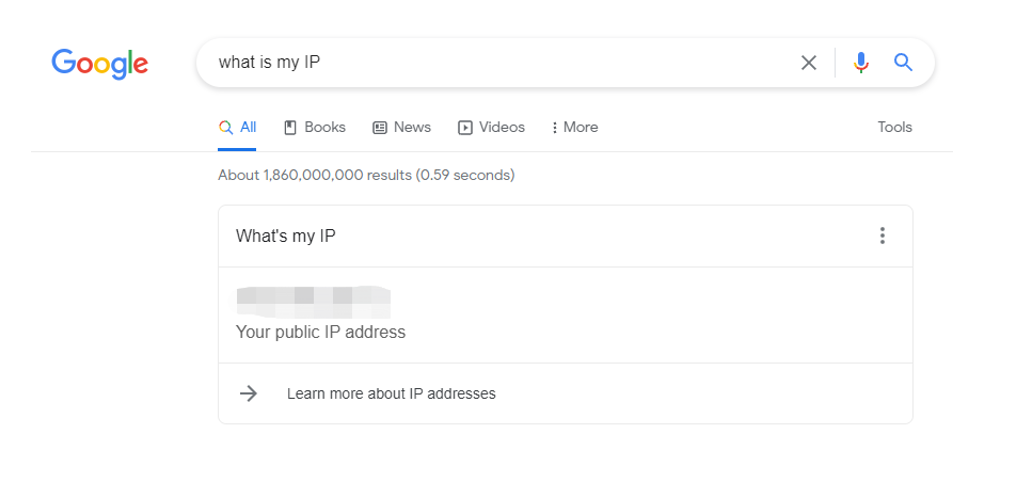
Since every internet-connected device is assigned an IP address, whether you’re a computer or a phone, just open a browser and search: What is my IP to see which IP address your current device is connected to.

what is my ip

How to change IP addresses?

There are many ways to change IP addresses, depending on the device you are using.

1) If you are using your mobile phone to access the Internet, disconnect your phone from the network and reconnect it by turning it on and off in airplane mode, and the carrier will assign you a new IP address. (Dynamic Host Configuration Protocol automatically assigns an IP address within the region to the client)

2) If you need to change the IP address of your computer, you can restart the router so that the carrier can re-assign the IP address to you:

  • Power Off Restart

What if you forget your router admin password or do not want to log in to the admin interface to restart the router? Then you can choose to power off and restart.

To be specific, unplug the power of the router, wait for about one or two minutes, and then plug in the power again. After the router is powered off for a period of time, restart the power, which is equivalent to restarting the router.

  • Restart the router from your phone

Nowadays, routers generally support APP management. You can connect to the network through the AP of the router and manage the router through the APP. It is also very easy to restart the router with the help of the APP.

  • Restart from computer Settings

First of all, open the router administrator login address: 192.168.1.1 (typically this is different by brand, so you can refer to the label on the router’s body) in the computer browser, and then enter the router administrator account password to log in.

After opening router Manager, click on the left menu to expand “System Tools”, then find “Restart Router”, then click “Restart Router”.

Finally, according to the prompt, click to restart can be completed. The restart takes about 1 minute. After the restart, you can connect to the Internet again. Generally, the IP address may be changed after the restart.

  • Another convenient and quick way to switch IP is to use a special IP switching software to switch – using a proxy or VPN.

Using an agent or VPN saves you more time than manually shutting down the router. Browsers that can change IP addresses either need to manually enter the IP address you want to change, or operate this way.

Proxies or VPNs are usually available on both computers and mobile phones and can be specified in any urban area. They break through the limitations of the region, you can change to any region of the IP address, which is very convenient and quick.

When you choose IP software, you should give priority to IP quality, including but not limited to IP speed, stability, security. There are many online IP agents, so you have to polish your eyes when choose. You can try to choose the IP agent that suits you before buy it.

Do you need to know more about proxies and VPNs? 

Want to know how to choose a proxy? 


A browser that can change the IP address

IE browser

Internet Explorer is by far the most understood and used browser, and learning how to change between IPs in the IE browser is believed to help many people escape their worries.

  • First, open Internet Explorer, and then select the “Tools” TAB at the top of the browser window. Select “Internet Options” from the Tools menu;
  • In the “Internet Options” window, click the “Connections” TAB above, and then click the “LAN Settings” button;
  • In the LOCAL Area Network (LAN) Settings window that is displayed, select Use a proxy server for your LAN and click Advanced.
  • In the “Proxy Settings” window that pops up, set a different type of proxy server (such as HTTP, HTTPS or FTP), enter the address of the proxy server to be used, and click “OK” to complete.

Firefox

  • Open the Firefox browser
  • Select “Options” on the menu bar and go to the Network Settings section.
  • Click “Settings”, the “Connection Settings” dialog box is displayed.
  • Select Manually Configure proxy and enter the IP address and port number of the proxy server.

The proxy IP port varies with the protocol type. HTTP proxy, HTTPS proxy, and SOcks5 proxy are common, and their ports are 8080, 443, and 1080 respectively.

Chrome

  • Open Chrome on our computer, click on the list icon in the upper right, and select Settings.
  • After going to Chrome’s Settings screen, scroll down to the bottom and click Advanced.
  • After opening advanced Settings, find the Open Agent Settings under the system and click there.
  • After enabling proxy Settings, go to the Internet Property Connection interface and click LAN Settings.
  • Enter the LOCAL area Network (LAN) Settings screen, you can see that the default is automatic configuration, automatic detection Settings.
  • Deselect the automatic detection Settings, select the bit LAN under the proxy server to use the proxy server, enter the IP address and port number of the proxy, and click OK to complete the Settings.


The best browser that can change the IP address

Are you a computer nerd? Have you read the above introduction without knowing what IP address to enter? Or are you tired of manually entering an IP address? Which agent to choose? If so, we are happy to tell you that these problems will soon be resolved!

With ClonBrowser, all problems will be solved! It won’t take you a second!

ClonBrowser

ClonBrowser is very focused on your experience. This browser has a convenient and comprehensive proxy mode, supporting a variety of proxy protocols, including HTTP, HTTPS, Socks5, Shadowsocks. At the same time, software inheritance supports a variety of agents, so you can just fill in the agent information and bind it with one click!

The agents we provide are :

Here, you are free to choose your proxy without any hassle.

As a virtual browser, ClonBrowser is more than just an agent integration. It uses virtual configuration technology to enable you to do things on one computer that can be done on multiple computers, helping you beat e-commerce, social marketing, and sales comparisons!

To learn more about ClonBrowser, please click here to enter the official website for inquiries! We look forward to your arrival!

webrtc

WebRTC IP Leaks | How to test and prevent WebRTC Leaks?

Why need to pay attention to WebRTC IP Leak?

Webrtc is indeed a way that leads to IP leaks. It poses a threat to anyone who uses a VPN and tries to remain anonymous online without showing the real IP address. Many users asked online:

“Should I turn off the WebRTC?”

“How do I know if WebRTC has leaked my IP?”

In fact, we enjoy and worry about the Internet every day. We always feel like we’re being monitored by the Internet. The Internet may know our private information, such as what we bought yesterday and what we browse today. It’s true that the Internet even knows where you live — via an IP address. There were 152,000,000 Google searches for “IP leak”. We can find that “webrTC IP leak” is also a big part of it.

Don’t be afraid, keep reading and you’ll find yourself finding an article that will help you! We’ll show you how WebRTC leaks your IP address, the way to know if your IP is leaked, and how to prevent  WebRTC IP leaks.

webrtc


What is the WebRTC

WebRTC, whose name comes from an abbreviation for Instant Web messaging, is an API that enables web browsers to conduct real-time voice or video conversations. It allows voice, video chat, and P2P sharing (real-time communication) in the browser without the need to add additional browser extensions.

The history of the WebRTC

In May 2010, Google acquired the GIPS engine of VoIP software developer Global IP Solutions for $68.2 million and renamed it “WebRTC.” WebRTC uses THE GIPS engine to achieve web-based video conferencing and supports 722, PCM, ILBC, ISAC and other encodings. It uses Google’s own VP8 video decode and also supports RTP/SRTP transmission.

Google integrated the software into its Chrome browser in January 2012. Meanwhile, the FreeSWITCH project claims support for iSAC Audio CoDEC.

Characteristics of the WebRTC

1) WebRTC implements web-based video conferencing, which is based on WHATWG protocol. The main purpose of WebRTC is to enable Web developers to easily and quickly develop rich real-time multimedia applications based on Chrome, Firefox, and other browsers, without downloading and installing any plug-ins. Real-time communication capabilities can be achieved by writing simple javascript in a browser. Is an open-source software.

2) WebRTC provides the core technology of video conference, including audio and video collection, coding and decoding, network transmission, display, and other functions

3) Although WebRTC was originally developed by Google, it supports Windows, Linux, MAC, Android, and many other platforms.

4) Whether used for personal or business activities, it is free.

5) It can be used for mobile applications.

6) It offers better sound quality compared to Flash, with built-in adjustable microphone Settings. WebRTC is known for its ability to enhance video and audio chat.

WebRTC hopes to build a robust real-time communication platform between multiple Internet browsers, forming a good ecological environment for developers and browser manufacturers. Google is also working to make WebRTC’s technology one of the HTML5 standards.

Browser support

browser support

WebRTC is supported in the following browser versions:

  • Desktop PC Side: Google Chrome23, Mozilla Firefox22, Opera18, and Safari11
  • Android: Google Chrome 28 (enabled by default starting from version 29), Mozilla Firefox 24, and Opera Mobile 12
  • Google Chrome OS
  • Firefox OS
  • iOS 11
  • Blackberry 10 features a built-in browser: Bowser


How does WebRTC leak IP?

WebRTC’s IP leak was discovered by Daniel Roesler in early 2015. He pointed out that:

Firefox and Chrome have implemented WebRTC that allow requests to STUN servers to be made that will return the local and public IP addresses for the user. These request results are available to javascript, so you can now obtain a user’s local and public IP addresses in javascript.

Additionally, these STUN requests are made outside of the normal XMLHttpRequest procedure, so they are not visible in the developer console or able to be blocked by plugins such as AdBlockPlus or Ghostery. This makes these types of requests available for online tracking if an advertiser sets up a STUN server with a wildcard domain.

WebRTC uses Session Traversal Utilities for NAT (STUN), TURN, and ICE to penetrate firewalls or NATs on the VoIP network. The user sends a request to the server, and the STUN server returns the IP address and LAN address of the system the user uses.

The returned request can be retrieved in JavaScript, but because this process takes place outside the normal XML/HTTP request process, it is not visible from the developer console. This means that the only requirement for this vulnerability is for the browser to support WebRTC and JavaScript, and any site can simply execute some JavaScript commands to get your real IP address from a Web browser.

The threat of WebRTC IP Leak

The vulnerability allows web administrators to easily see a user’s real IP address through WebRTC, even if the user uses a VPN to hide their IP address. The vulnerability affects WebRTC-enabled browsers, including Google Chrome and Firefox, although it appears to affect only the Windows operating system.

ip leaked

Network security researcher Paolo Stagno tested 70 VPN providers and found that 16 of them had leaked users’ IP addresses through WebRTC (23%).

Check for IP leaks

  • Connect to the VPN proxy
  • Access:ip.voidsec.com

If you see the public IP address in the WebRTC column, you have exposed your identity. If the WebRTC leak inspector indicates that you have a leak, you can take the following 6 steps to confirm that it is 100% correct.

  • Disconnect from your VPN.
  • Open a new page in a new window, and simply type ‘What’s my IP?’ into your browser’s search bar to find your IP address.
  • Write down all the public IP addresses you see.
  • Close the page.
  • Reconnect to your VPN and reopen the page.

If you see any of the same public IP addresses after reconnecting to your VPN, you have a leak. If not, your IP address is secure.

Will the VPN protect me from WebRTC IP Leaks?

There are some VPNs that can protect against webRTC vulnerabilities. Here are the VPNs that protect users from WebRTC leaks through firewall rules:

1) Perfect Privacy: The Perfect Privacy VPN client is configured to prevent WebRTC vulnerabilities.

2) Express VPN: Express VPN has updated its software to further protect users from WebRTC leaks.

Note: Just like browser fingerprints, WebRTC issues are a vulnerability in Web browsers. Therefore, it is better to fix the root cause of the problem through your browser rather than relying solely on VPN protection.


How to prevent WebrTC IP Leak

For users who do not want their real IP addresses to be leaked, you can disable WebRTC to prevent the leakage of real IP addresses.

Firefox:

1) Enter “about:config” in the browser. And then search “media. peerconnection. enabled”. Double-click it and change it to “false”.

2) Type “about :config” in the URL bar, then press Enter. Then, agree to the warning message and click “Accept the risk!” Then, in the search box type”media.peerconnection.enabled”. Double click on the “media.peerconnection.enabled” name of the preference value changes as “false”.

Chrome:

1) Since WebRTC cannot be disabled in Chrome (desktop), additional components are the only option (for those who don’t want to give up using Chrome). As mentioned above, it’s important to remember that browser add-ons are not 100% efficient.

In other words, you may still be vulnerable to WebRTC IP address leakage under certain circumstances.

There are some add-ons worth considering: WebRTC Leak Prevent /uBlock Origin. (Install the “WebRTC Leak Prevent” extension, set the “IP handling policy” option to “Disable non-proxied UDP (force proxy)” and click “Apply Settings” to apply.)

2) On your Android device, turn off the WebRTC in URL chrome://flags/. Scroll down to find the “WebRTC stun origin header” – then disable it. For security, you can also disable the WebRTC hardware video encoding/decoding option, although this may not be required.


Conclusion about WebRTC IP Leak

The WebRTC vulnerability highlights a very important concept for those seeking higher levels of online anonymity and security through various privacy tools. The browser is usually the weak link in the chain. Therefore, it is important to pay attention to the browser itself.

use ClonBrowser to protect privacy

ClonBrowser is a very powerful browser, it is very important to protect your privacy! If you have been worried about browser security issues, you can click here to learn more about our features! I believe it will bring you unexpected surprise!

different browsers location settings

How to control your browser location settings

Why should you care about browser location settings

You’ve probably heard that when you surf the Internet, a lot of information about yourself is revealed. But do you know what kind of data is actually collected by someone?

In fact, the browser collects the following information (not limited to this):

1) Data about your hardware and software

2) Network connection. This information includes the IP address and browser speed.

3) Browse history

4) Mouse movement and clicks on websites. The way you move your mouse represents your operating habits.

5) Which fonts are installed on the computer and the language used on the operating system.

6) Your location.

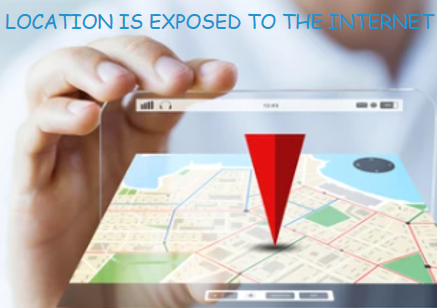
location is exposed to the internet

When you’re not using a browser, your data is constantly being uploaded, including your location. Perhaps you do not care about the Internet access to their computer information, but no one is willing to expose their whereabouts at any time, and some of them are as accurate as tens of meters, causing fear.

The development and popularization of the mobile Internet have greatly changed our life patterns. However, it is a double-edged sword. While bringing us great convenience, it also makes our privacy protection and personal information security face a series of risks and challenges.

There is no doubt that browser geolocation technology wasn’t created to invade your privacy. They were created to enable us to live a better life. For example, when you search for a product, the browser will provide you with the nearest store so that you can use it quickly. For example, the browser location can connect to the weather function to alert you to recent weather changes. These convenience features make it impossible to reject a location-based browser.

The Internet has done unrivaled good for bringing people and nations closer together, making the virtual world feel almost like reality. But, sadly, some people take advantage of this physical distance to steal. Spammers, phishers, cyber thieves, and so on take advantage of the fact that it is difficult to monitor online activity or events. Your movements are observed on the Internet, and your personal identity begins to form. When precise geolocation is used illegally, personal and property security issues such as illegal detention and fraud can also start to jeopardize your life.

This article will teach you how to set up your browser location settings and give you control over your location.


Different browsers location settings 

There are many browsers available to users in the market today. Among them, IE, Chrome, and Firefox dominate most markets, while Microsoft Edge and Apple Systems’ own Safari have more and more loyal fans. So we will show you how to set up and share your geographical location with your browser.

IE

Generally speaking, when you open Internet Explorer, the browser will ask you if you want to disclose your location information. If you agree to disclose your location information, then your location information will be sent to the browser.

However, if you want to adjust your location settings and manage your location, you can use IE’s Privacy Settings to adjust how your browser monitors your behavior and determine whether and when sites can access your location information.

To do this, all you need is:

1) Double-click the IE icon on the desktop to start IE.

2) Locate the Tools button in the upper right corner of the page and click Internet Options.

3) In the privacy TAB, you are free to choose whether to select the “do not allow websites to request your physical location” option.

When you select location, the browser will confirm again that you are allowing the site to use the current location. At this point, you need to choose whether to allow tracking of a location only once or always. When you turn off the option to ask for a location, you need to clear the permissions you have granted to your site.

Google chrome

Like IE, Chrome will ask for your opinion when tracking your location. If you agree to enable location and share your location, please check chrome’s privacy policy.

If you did not select a shared location before and you now have a need for a share location, you can:

1) Click the Chrome icon in the browser toolbar to launch the browser,

2) Click “Settings”. After entering the Settings page, in the “Privacy Settings” section, click “Website Settings” (Website Settings can control what information can be used and displayed on the website).

3) In the dialog box that displays, scroll down to the “Locations” section. Select “Allow all sites to track my location” or “Ask before Tracking” to allow all sites to automatically access your location.

different browsers location settings

When you need to change (allow or delete) the Settings for a particular site, just click on the special icon (usually in the shape of a lock) to the left of the site’s URL to enter the site Settings and modify permissions.

Firefox

Firefox’s Location service is also optional. It won’t share your location without your consent, but with your consent, Firefox will locate your information and share it with sites that require location information. If you refuse to share your location, nothing will happen.

To make new settings for a location, you can:

1) Click the Firefox icon to open the browser

2) Click “Settings” to open the setting interface, select “Privacy and Security”, slide down to “Permissions” and find “Location”.

3) Click the “Settings” option on the right of “Location” to reset location permissions. Here you can allow a site to request your location, or you can prohibit new location requests.

Note that if you let your browser remember your choice of location permission, the browser will automatically follow the previous guidelines in any subsequent situations that require a choice.

Microsoft Edge

The first time you visit a site that requires location information, Microsoft Edge asks you for permission. When the location is turned on, you can also control the site’s queries you at any time.

If you want to adjust location Settings, you can:

1) Click the Microsoft Edge icon to launch the browser,

2) Tap the three dots in the upper right corner to go to “Settings”. After entering the Settings page, find the Location option in “Site Settings”.

3) After turning on the “Location” option, you will see the “Ask before tracking” option. You can turn this option on or off to adjust whether all the sites that need to be located can access your location.

Like Chrome, you can also allow or block specific sites from accessing your location. You just need to open the site with Microsoft Edge, click the lock icon (sometimes the danger icon) on the left side of the site’s URL, enter the site permissions and change the location permissions (default, allow, block).

Safari

When you visit a site using the geolocation service in Safari, you will be prompted to share your location with the relevant site. It’s worth noting that Safari has a “Remember my Decision of the day” option, and when you choose it, your decision (agree/reject) will only be valid for 24 hours, which is easier to modify than always agree or always deny.

To directly adjust location information, perform the following operations:

1) Click the Apple icon to activate the menu list and select “System Preferences”

2) Click the “Security and Privacy” TAB in the window that opens and click the “Privacy” TAB after entering. (Remember to click on the lock at the bottom of the window to enter the password to ensure changes and prevent further changes)

3) Click the “Privacy” TAB and select “Location Services” on the left. Here you’ll see the option to enable/disable location and the Safari app, which you can adjust to your liking.


The best way to set up browser location settings

Do you think your location information will no longer be exposed after looking at the various browser location settings above? No, it’s not! Some users said that even after they disabled the location permission in Safari and then go somewhere else to search for “weather” using their browser, or they will see weather search results for their real-time locations.

What happened?

It’s not that the browser is secretly tracking you after the location function is disabled, it’s that sometimes your location information is revealed along with your IP address!ClonBrowser

To protect your real location and personal privacy, you need a real privacy browser! ClonBrowser is a great virtual browser that offers you a completely independent browsing experience with advanced virtual provisioning technology and excellent integrated agents. The proxy allows you to have a completely unrepeatable IP address to hide your IP information and make it impossible for other sites to locate your browser. ClonBrowser has optimized your browser location settings to protect your security!

browser fingerprint

Browser fingerprint and Anti-fingerprint Browsers

What is a browser fingerprint?

Nowadays, we can’t live without the network, but users’ browsing behavior will leave your fingerprints on the network, which may pose a threat to your privacy, so we need to pay attention to the browser fingerprints.

What is a fingerprint?

When the word “fingerprint” is mentioned, what everyone thinks about is the specific “authentication code” that we have on our fingers. We all know that everyone’s fingerprints are not the same, even each of our fingers, so fingerprints can be used to identify individuals. It represents us and carries a lot of information.

The fingerprint we are talking about here is the Internet domain vocabulary. This vocabulary explains its function vividly.

browser fingerprint

The Internet is a big abstract world. When a website needs to know the characteristics of users such as types and preferences, it can obtain the characteristics of users through technology when it cannot meet them, and then deduce the orientation of users according to the characteristics. The results, calculated from the information obtained through technology, are the fingerprints each user leaves on the Internet.

What information does the browser fingerprint contain?

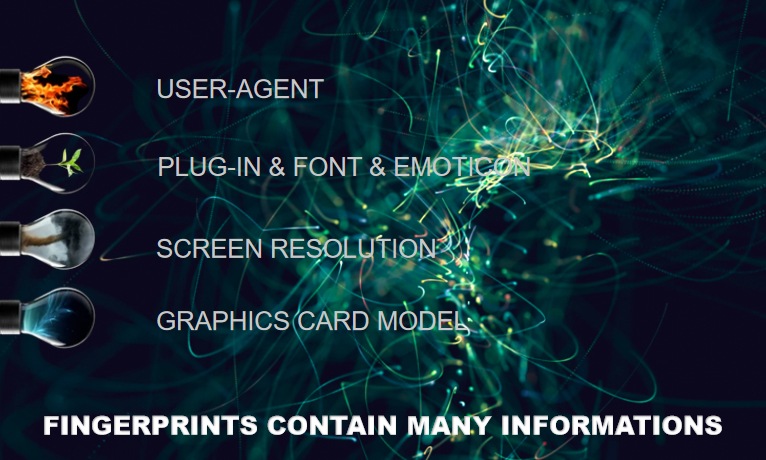
Fingerprints contain a lot of information to identify individual users, such as:

  • User-Agent: Referred to as UA. It enables a server to identify the customer’s operating system, CPU type, browser version, browser rendering engine, browser language, and so on, allowing websites to provide different page services to different systems and browsers according to the results of identification.
  • The plug-in, font, and emoticon: The Internet uses a fingerprint to tell it what kind of plugins a user has downloaded. It also gives a chance to see what language and font they’re using, if the browser has a Flash or Java plugin installed.
  • Screen resolution and graphics card model: Screen resolution is a setting that determines how much information is displayed on a computer screen, measured by horizontal and vertical pixels. The Internet needs to know the screen resolution of a user’s device in order to provide different levels of service to different devices.
  • Other information: The user’s time zone, geographic location, and HTTP ACCEPT information is also exposed to the Internet along with the fingerprint.

fingerprints contain many informations


what does anti-fingerprint mean?

Before we talk about reverse fingerprints, let’s correct a misconception first.

Because fingerprints hide a lot of users’ personal information, many people think that fingerprints only bring us a privacy crisis. However, this is a wrong idea under the influence of crisis awareness, because fingerprints sometimes bring benefits to users.

For example, sometimes it prevents financial fraud.

Internet banking is becoming more and more popular nowadays, almost everyone has an online bank account. If your login information (account and password information) is stolen by criminals, when they login to your account, the bank will be alerted and ask the person who logged in to the account to verify the information because the geographical location and device information does not correspond to the fingerprint information you left in the bank.

This way, your account can’t be accessed by others, and you can receive a warning message in the first place.

In addition, there are some convenient life services that can be provided to you through fingerprint screening, so as to enrich your life.

However, everything has two sides. The presence of browser fingerprints does bring some harm to users.

Browser fingerprints and cookies

The convenience of the Internet makes it more and more integrated into society, becoming an inseparable part of life. Cookies were originally created to improve the user experience.

A cookie is a simple text file stored in a client that records a user’s personal information. This file is associated with a specific Web document and is used to store information when the user’s device accesses the Web document.

When these people use the device to access the Web document again, the information stored is available for the user. It avoids the trouble of typing again, which improves browsing speed and user experience.

However, cookies hold users’ personal information, so the malicious application of cookies also comes into being, because that information may bring value to some people.

For example, some advertisers will use cookies to track and read your needs and user information. When you browse the service website, you may suddenly receive relevant advertising information from a third party.

Here’s another example, after using the browser to browse a product, the next time you will receive a lot of various advertisements of the same kind of goods when use this computer to surf the Internet again…

After being annoyed, some computer users try to find cookies and delete the data to protect their personal information, others simply disable cookies in their browsers, or even use other plug-ins to block tracking.

When advertisers realized that cookies were being understood and mastered by most people, they turned their attention to browser fingerprints.

Why need anti-fingerprints?

  • The fingerprint is more subtle and harder to detect than Cookies, and the information produced is more accurate. Cookies need to store information in the browser, so they can be found by the user, and also can be cleared by the user.

Browser Fingerprints don’t save anything on the client, so they can’t be detected and can’t be erased (you can’t even tell if a browser fingerprint is being collected when you visit a site).

Each person’s browser has a very unique fingerprint. When you first visit a website, the website records your browser fingerprint on the server-side, and it also records your behavior on the site. The next time you visit, the webserver reads the browser fingerprint again and compares it to the stored fingerprint to know if you have been there before and what you did during your last visit.

  • Fingerprints are hard to hide. Some sites use fingerprint tracking to detect multiple user accounts because fingerprints are unique. So it can be used to infer whether two accounts belong to the same user or not, even if the accounts are different.
  • The method of obtaining fingerprints can be even more dangerous. Fingerprint information can also be obtained through typical ways, such as Trojan horse implantation, virus software, etc.

anti-fingerprint


Anti-fingerprint browsers

Check the browser fingerprint

To protect people’s fingerprints, the Electronic Frontier Foundation, a nonprofit international legal organization founded in 1990 to defend people’s rights on the Internet, created Panopticlick, a site dedicated to testing browser fingerprints.

Panopticlick is designed to make users more alert to fingerprint threats.

It will check the user’s browser and related plug-ins, and audit the fingerprint of the browser. It will assess the existing safeguards and fill in the gaps to create a secure browsing environment for you.

At the end of 2005, the latest version of Panopticlick also added an AD whitelist to allow ads that meet the format standards to pass through, making the experience more advanced.

MultiLogin

Multilogin is an anti-fingerprint browser with many users in the current market.

It mainly has the function of controlling the browser fingerprint and can carry out team cooperation and assign permissions to employees. Business cooperation can also be built to achieve cooperation between different teams.

However, it may be impossible to log in during the use, because there are too many users. And the price is expensive.

Kameleo

Kameleo stores information on the user’s computer, which allows you to customize the profile and share it with the team. It’s cheaper than Multilogin, but the pages are relatively simple.

ClonBrowser

ClonBrowser is a fast-rising privacy browser that can manage thousands of computers simultaneously in the browser. It creates a completely separate virtual browsing environment for each profile. The fingerprint information of users is completely protected. The cookies, local files, and caches are completely isolated and will not be exposed.

The share and transfer capabilities of ClonBrowser make your team’s business process easier. At the same time, the browser also provides you with the most complete setup service. You can easily configure user agents, plug-ins, HTTP headers, geographic location, and other parameters to make each of your sessions fast and efficient.

VPN

IP VPN vs VPN | What are they? What’s the difference?

What is VPN

VPN is short for Virtual Private Network. VPN creates a private network over a public network for encrypted communications.

The VPN gateway implements remote access by encrypting the data packet and converting the target address of the data packet.

VPNs are widely used in enterprise networks because they can be installed on servers, hardware, and software.

VPN is a type of remote access technology that uses a public network to build a private network for users. So what is remote access? When you want to work from home, or when someone from another country wants to work on the company Intranet, such access requests are called remote access.

VPN

However, some people will question, why not choose the dial-up line to access the enterprise Intranet directly?

Of course, you can, but it can be a security risk for businesses and individuals.

Some traditional enterprises choose to use leased DDN lines (which provide users with dedicated medium and high speed digital data transmission channels, so that users can use it to organize their own computer communication networks) for remote access, but this kind of equipment is relatively old, and enterprises need to pay more expensive communication costs and equipment maintenance costs.

VPN essentially uses a series of encryption technologies to install a data exchange channel on the public network.

After a VPN server is installed on the Intranet, the Internet is connected to the VPN server when remote users want to access Intranet information. Then the VPN accesses the desired website.

The VPN in the middle transmits information to servers and user devices on both sides while encrypting the data. This encryption process makes much of the data “unreadable” to the outside world as if it were a separate channel, but in fact, a VPN still uses a public network.

The working process of the VPN

The workflow of VPN is very similar to the sealing, transportation, and unpacking of express packages. The workflow of VPN is as follows:

  1. Protect the host from sending information.
  2. Select the delivery mode: According to the rules set by the network administrator, decide whether to encrypt the data (packaging and sealing) or directly transmit the data.
  3. Packing: If encryption is required, the VPN device encrypts all the data (including the data to be transmitted, source IP address, and destination lP address), adds a data signature, and re-encapsulates new data headers (including the security information and initialization parameters required by the destination VPN device).
  4. Transport: The encapsulated packets are transmitted over the public network through the channel.
  5. Check and unpack: After the data packet arrives at the destination, the data packet is decrypted (unpack) after checking the digital signature.

VPN data is express packages

In the entire flow, the destination address of the original data packet (VPN destination address) and the remote VPN gateway address are very important, which affect the whole VPN communication.

According to the destination address, the VPN gateway can determine which packets need to be processed, and those packets that do not need to be processed can be directly forwarded. The remote VPN gateway address specifies the destination address (the address at the other end of the VPN channel) to which the processed packets are sent.

Because communication is bidirectional, gateways at both ends of the channel must know the destination address of the packet and the remote VPN gateway address to ensure the correctness and stability of information transmission.

The advantages of VPN

  • Convenient and Flexible–VPNs make it possible to work flexibly.

Home and business travel are no longer barriers to not being able to work, and business partners and others can take advantage of locally available high-speed broadband connections to connect to corporate networks.

  • Easy for use–VPNs give users a whole new experience.

It provides an Internet infrastructure that is easy to set up so that both new and old users can quickly pick up and easily add to the network.

  • Full of Security–VPNs have a higher level of security. 

It establishes tunnels. Encryption and identity protocols protect data from outside prying eyes, effectively preventing data theft and other unauthorized devices from reading the data.

  • Stable and Efficient–VPNs provide quality service.

Wan traffic is unstable and bandwidth utilization is low, the traffic distribution is polarized. During peak traffic periods, network bottlenecks are caused due to congestion, which greatly affects the transmission of real-time data. However, a large amount of bandwidth is idle during low traffic periods. VPNs use traffic control policies to arrange bandwidth based on priorities to prevent congestion.

  • Manageable

VPNs are fully managed by the user, making it easier for everyone else to use it.

  • Save money

The cost of traditional long-distance dedicated lines is huge. VPNs only need to connect new nodes and provide the communication rules between new points and other points at a relatively low cost.

The disadvantages of VPN

  • Relyon suppliers

Users need to sign a contract with a VPN supplier to keep the service running. Individuals can’t directly interfere with VPN performance. Creating a VPN is a complex process, so it’s important to find a good vendor and sign a reasonable contract.

  • Maybe the product is not compatible

VPN products and solutions from different suppliers are sometimes incompatible, driving up the cost of using the device.

  • Wireless devices may pose security risks

Any advanced encryption can be breached as users roam between access points.


What is IP VPN

We already know what VPN is. We know that it takes a lot of money and energy to buy the equipment, design and build the lines, and carry out daily maintenance. Even training can be costly. In this case, you need to purchase the VPN service provided by the suppliers. IP VPN is also a service they provide.

Based on the Backbone network owned by the supplier and using the advanced multi-protocol label switching (MPLS) technology, the IP VPN service provides end-to-end service quality assurance and security services for enterprise users to build an internal private network.

Generally, IP VPN service suppliers have professional technical teams and a relatively large operation scale to help users to establish a more mature and stable network, which saves a lot of time and unnecessary capital consumption for users, and at the same time enables users to have a better experience.

Common technologies of IP VPN

  • L2TP: Widely used for distributed mobile customers.
  • IPSec: It can be used alone or in conjunction with tunneling protocols such as L2TP and GRE, giving users greater flexibility and reliability.
  • GRE: An early, mature protocol, which is easy to implement.
  • MPLS: A new technology that uses tags to guide data along with an open communication network at a fast and efficient rate. It is used to regulate network resources and improve service quality.


The difference between VPN and IP VPN

VPN and IP VPN have different mechanisms

The tunnel can ensure security. Therefore, IP VPN also uses the channel mechanism to make the encapsulation mode and address information of VPN packets irrelevant to that of the bearer network.

However, while IP VPN is very similar to VPN, they are different.

VPNs belong to layer 3 and layer 4 of the OSI model and, as mentioned earlier, build channels over the public network, which means that the VPN still relies on the public network. And no matter how you defend it, using a public network means you may face bandwidth deficits (denial of service) and slow speeds.

However, IP VPN belongs to layer 2, which means that it is off the public network and connects to the site through a private network, which ensures the efficiency and security of data transmission.

OSI Model layer


VPN and IP VPN apply different circumstances

VPN is recommended if you are working for an individual’s daily life or for a small startup where you don’t need to telecommute. Because A VPN can meet your data transmission and security needs without paying excessive costs for maintenance, resulting in a personal economic burden.

But if it is a large enterprise or a major organization, IPVPN is the best choice. Because IP VPN can meet the demand of access from different places, it is more efficient and more secure. And large enterprises can support the cost of operating an IP VPN.

For suppliers, IP VPN is a business scope with great potential, and improving better IP VPN services is the need of The Times.