characteristics of datacenter ip

What Is A Residential IP? How Is It Better Than Datacenter IP?

In our daily use of proxy IP to surf the Internet, we often encounter certain websites restricting our IP.

The website will have different restrictions for different forms of IP

Datacenter IP

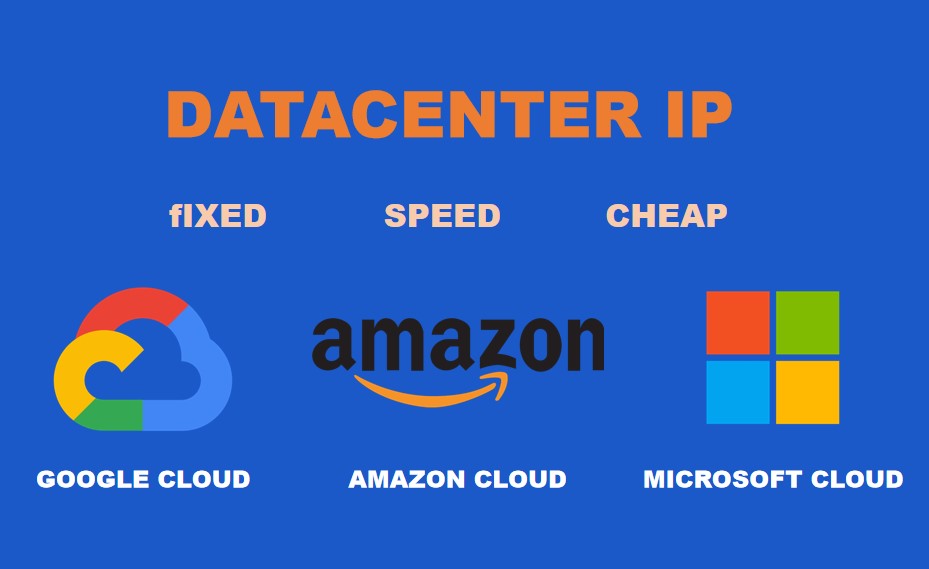
The proxy IP or VPN IP we generally use is the IP of the datacenter IP, which is the IP of the computer room.

For example, IP owned by Google Cloud, Amazon Cloud, Microsoft Cloud, etc.

It comes from the computer room of a network provider and is an IP on a server. Because it is a server, the IP is fixed. Because the IP does not change, it is easy to be identified.

If it is used for difficult tasks, such as crawling data, the target website can easily recognize that you are a fixed IP, and the IP will be blocked.

In order to save costs, many agency service providers will share and allocate the same IP, which is susceptible to the influence of other users.

For example, You are operating social media like Facebook, and IP issues will drive you crazy.

Characteristics of datacenter IP

  • IP is fixed
  • Stable IP and fast speed
  • IP price is relatively cheap

characteristics of datacenter ip

Residential IP

They can be used in a real family. The IP address is assigned to its subscribers by the service provider (ISP). Those IP addresses bound to the home address are called residential IP addresses.

For example, IP is owned by companies such as Verizon FiOS, AT&T U-verse, Cox, Comcast, Charter, or Time Warner.

If you are using a residential IP to access the Internet, you can upload your own geographic location information with confidence. Most websites trust residential IP addresses and will not be strictly checked like other forms of IP.

The residential proxy provider sells these IP addresses to people so that they can use the confirmed location to access the website.

Its working principle is very simple. If you are using a residential proxy to send an HTTP request to the website, the request will be sent to the proxy server. The proxy server then routes your request to the website via the home address of the other person.

What Is The Residential Proxy IP?

The residential proxy is an intermediate server that uses the residential IP provided by the ISP to someone’s device to browse the website. Because it uses the real IP address provided by the ISP, it is trusted.

The IP address used may come from a personal computer, router, or any form of Internet-enabled device.

For example, IoT devices, edge computing devices.

How Does The Rotating Residential Proxy IP Work?

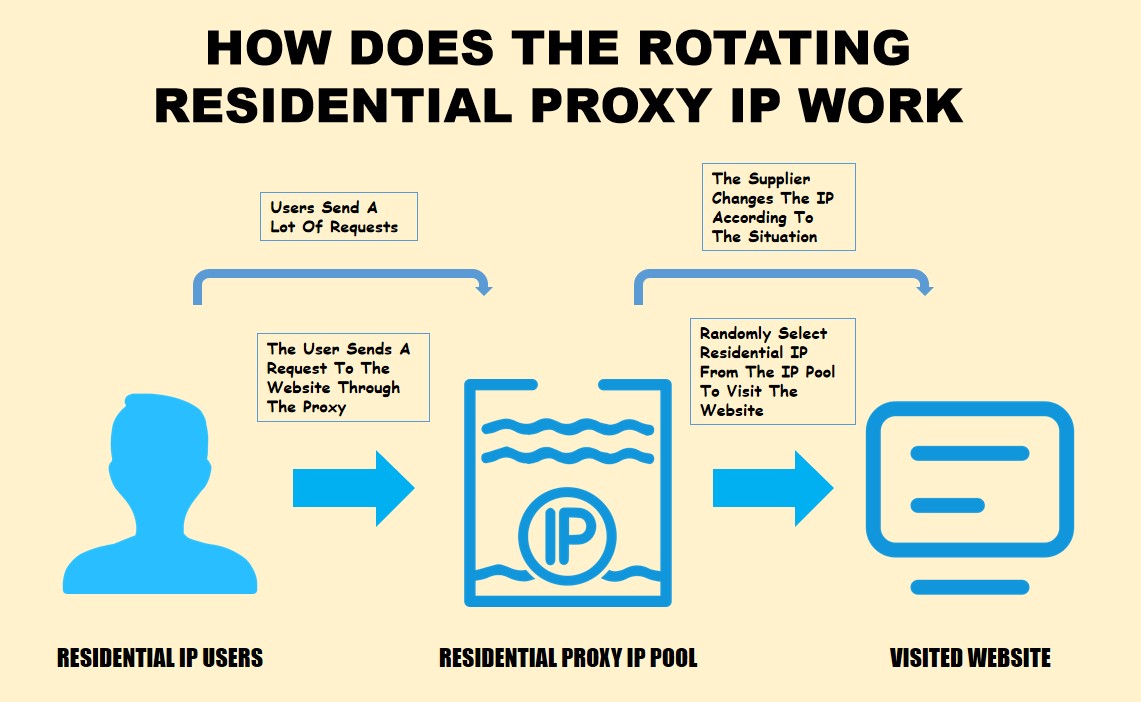
The residential proxy provider has a pool of IP addresses. When you make a website request to a website through a residential proxy server, they will choose any available IP address (random) in the pool and then route the request to the website through them.

For rotating residential proxy IP, they will change the session of the IP address used for connection according to the website request or the specified time.

When the IP is rotated by session or request, each website request you send will be routed through a different IP address.

how does the rotating residential proxy ip work

This method is especially tried for website crawling. During the crawling process, you send a large number of requests every minute. With this kind of rotation, the website cannot track you.

Acting Provider of Residential IP

Residential IP proxy providers have a large number of residential IP addresses in their IP pools.

For example, Bright Data has 70 million, Oxylabs has 50 million, Smartproxy has 40 million, and GeoSurf has 8.5 million.

How do they obtain these IP addresses?

Different residential IP providers have their own IP management methods.

Let’s take Bright Data as an example.

They have a free VPN service of Hola VPN. Before you can use the free Hola VPN, you must grant them permission to use their IP and Internet connection. This means they use the Internet connection and IP address of the Hola VPN user.

They also have a software development kit (SDK), developers can implement the tool in their applications so that users can subscribe to the service and earn commissions.

When you subscribe to their service, you grant them the right to use the Internet connection and IP.

Why Does Residential IP Gain More Trust Than Data Center IP?

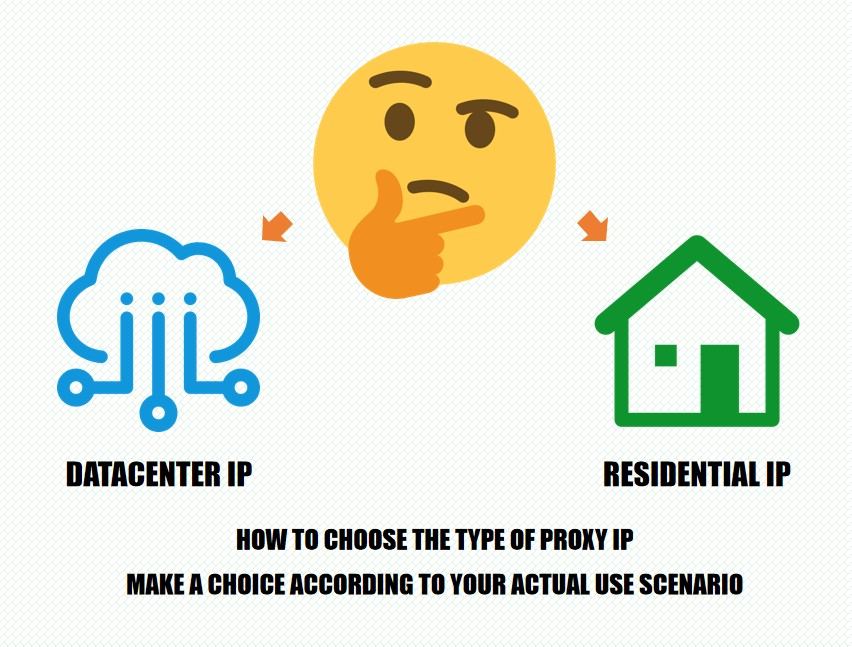
Compared with data center IP, website server security system or risk control system has higher trust in residential IP. Because they are the IP addresses of the family.

Compared with setting up residential IP, a person who is proficient in technology can set up data center IP in a very simple way.

Websites are aware of this and use it as a measure of trust. They provide both residential IP and data center IP.

Some websites classify residential IP as “good IP” and data center IP as “bad IP”.

how to choose residential ip and datacenter ip

Of course, the risk control or security policies of each target website are not consistent, except for IP restrictions. The tracking of the user’s environment through the browser also takes a lot of weight.

This part can use some privacy protection browsers to cooperate with the residential IP to achieve the purpose.

For example, ClonBrowser, Tor.

What is the mac address

What is the MAC address and how to protect it

What is the MAC address?

The full name of a MAC Address is Media Access Control Address. It is also sometimes referred to as LAN Address, Ethernet Address, or physical Address.

A MAC Address is a flash memory chip that is burned in a Network Interface Card when produced by the Network equipment manufacturer.

In the OSI model, the network layer at layer 3 is responsible for IP addresses, and the data link layer at layer 2 is responsible for MAC addresses.

The MAC address identifies a unique network adapter on a network. If a device has one or more network adapters, each network adapter must have a unique MAC address. Therefore, the MAC address is used to identify the location of the network device.What is the mac address


How does MAC address work?

Data packet transmission is a process in which packets on the network start from the initial point, constantly map the address of the target node to the MAC address of the intermediate node, and then start from the intermediate node until the final target node is found.

Let’s have a further look at this process.

According to the address of the target node, the initial node maps the IP address of the target node to the MAC address of the intermediate node to find the first intermediate node.

And then starts from the first intermediate nodes according to the IP address of the destination node map to the MAC address of the second intermediate node, so as to find the second intermediate node.

After the last intermediate node is found, the packets are mapped from the last intermediate node to the MAC address of the destination node according to the address of the destination node.

The packets will be sent to the target host through this process.

IP addresses and MAC addresses are associated by using the ARP(Address Resolution Protocol). ARP assigns network IP addresses to devices with corresponding MAC addresses. The switch can find the MAC address of the local device based on the IP address in the network.

When the data packet reaches the switch, the switch will see the destination IP address of the data packet and check whether there is a MAC address corresponding to the IP address in the machine.

If the MAC address record is found, the data packet will be forwarded to the device with the corresponding MAC address. If no MAC address corresponding to the IP address is found on the switch, the switch will forward the destination to the device with the corresponding MAC address based on ARP.

The MAC address cannot be stolen

Today, many users use LAN to group hosts together and then connect to the Internet through intermediate devices such as switches or routers.

Because of the large number of hosts in the LAN, the need to distinguish between devices arises when uploading and recycling data. At the same time, there is also a growing need to prevent IP address theft.

IP addresses are only logical identifiers that can be changed by anyone, so they cannot be used as a specific factor in identifying a device. But MAC addresses can do because it is solidified in the network card inside and is immutable.

The IP address is related to the MAC address. The MAC serves as the identity card to prove the identity.

So in theory, unless the network card is stolen, otherwise it cannot be counterfeited. Based on the characteristics of the MAC address, the LAN selects the MAC address to identify specific users.

The mac address cannot be stolen

In the process of communication, the MAC address and IP address are mapped one by one through the switch or router. When a packet is sent to a host on the LAN, the switch will receive the packet first and maps the IP address in the packet into a MAC address according to the switching table, and then the packet will be forwarded to the host with the corresponding MAC address.

In this way, even if a host steals the IP address, if the host does not have the corresponding MAC address, the packet will not be received. And the anti-theft mode of sending process and receiving process is the same.


Differences between a MAC address and an IP address

Both IP and MAC addresses are unique. However, IP addresses are equivalent to home addresses, while MAC addresses are equivalent to identity cards. So they’re different in some ways:

  • The IP address can change, but the MAC address generally remains the same.

For a device on the network, such as a computer or a router, its IP address is assigned. On the same device or computer, it is easy to change the IP address, and users can easily obtain an IP address.

The MAC address, on the other hand, is written into the hardware by the manufacturer and generally cannot be changed. We can assign any IP address to a host or change the IP address as needed, but network devices (such as network adapters and routers) will have a MAC address once produced, and its MAC address cannot be changed by the configuration in the local connection.

But if something unexpected happens, for example, the computer network card is damaged, then after replacing the network card, the MAC address of the computer will also change.

  • The length is different.

The IP address is 32 bits, and the MAC address is 48 bits (6 bytes). The value is usually 12 hexadecimal numbers. Every two hexadecimal numbers are separated by colons, for example, 08:00:20:0a: 8C: 6D.

  • The distribution is different.

MAC addresses are assigned by the manufacturer, and IP addresses are assigned based on the network topology.

  • The protocol layer is different.

IP addresses are applied to OSI Layer 3 (network layer), while MAC addresses are applied to OSI Layer 2 (data link layer).

The network layer protocol transfers data from one network to another, and the data link layer protocol transfers data from one node to another on the same link by MAC address.


MAC Address Conflict

What is a MAC conflict?

The uniqueness and immutability of MAC addresses have been described in the previous section. In this case, the MAC address cannot be repeated.

However, some netizens reported that they had encountered MAC address conflicts and were unable to access the Internet.

It means that two same MAC addresses were encountered when the packet was returned. In this case, MAC address theft occurs. This is caused by an ARP virus attack or a malicious attack. Your MAC address has been taken by a machine.Virus attacks


How to find my MAC address?

  • Windows

First, press and hold down the “Start +R” keys on the keyboard.

Then enter “CMD” in the dialog box that is displayed.

Enter “ipconfig /all” in the command prompt window and press “Enter”. (The “ipconfig” command is to view the IP configuration information, and the parameter “all” indicates to view the configuration information of all net cards.)

The “physical address” is the MAC address.

  • Os

Open the system preferences panel.

Select “Network”, and tap “Advanced”.

Switching to the hardware panel to view the line of MAC addresses.

How do I protect the MAC address?

  • Binding a MAC address to a switch port is an effective defense.

However, only smart switches have the function of binding MAC addresses to ports. The widespread use of these devices is also expensive, so only a few people will spend a lot of money replacing their network equipment to avoid MAC address theft.

And binding port will also bring great inconvenience to the network management. The change of computer location will bring about the change of a port binding record, which increases a lot of management workload.

  • When MAC address conflict occurs, you can use MAC address spoofing to enable your device to continue to access the Internet.

However, this way is not recommended. Because any changes you make can mess up the whole process of sending and receiving data, causing the router to stop recognizing your device, making the problem even worse.

The MAC address you change may be the same as that of other users, causing others to lose access to the Internet.

  • Try to use VPN and Clon browser. Nip it in the bud and protect your MAC address from the start.

VPN can encrypt all your activities to prevent malicious attacks and the Clon browser is a product to protect your privacy. It can also provide you with high-quality privacy services so that your business and personal activities can become more secure.

what is geolocation

How Do I Hide My Geolocation

What is geolocation?

Geolocation is a location-based application, a set of Application Programming Interface(API) proposed in HTML5. It combines current location methods to get the location of the user’s browser. It can get a location for the user to locate once; It can also obtain multiple positions continuously to realize continuous tracking and monitoring of terminals.what is geolocation


The background of geolocation

With the development of Internet technology, more and more activities are based on geolocation. HTML5 provides the location API, and most of the existing browsers also start to study the location technology. Thus, it promotes the development of Web positioning and relevant map service applications, and also greatly reduces the Barriers of geographical positioning development, so that the anytime and anywhere map service becomes possible.

The emergence of geolocation enables us to use location services without having to install professional software, reducing the dependence on hardware drivers to a minimum. As long as there are relevant hardware devices (such as GPS module), accurate positioning can be directly realized, so that users can easily obtain location data.

The positive effects of geolocation

  • It searches for available objects by location and customizes content and services for users in specific locations to enhance the personalized user experience
  • It provides accurate and timely geographic reference data
  • It can regulate and develop Internet commerce and create business benefits

The negative effects of geolocation

  • Personal or business activities can be monitored gratuitously, increasing the risk of personal privacy invasions
  • It sometimes contributes to crime

Some positive and negative effects of geolocation


The geolocation function makes life more and more convenient for users, by which they can enjoy more services of high quality. And it also brings opportunities for companies to flourish. However, with the expansion of user groups, everyone’s personal information becomes more and more valuable. Criminals can use geographical location information to deeply understand the individual value of users and even carry out real attacks, which can cause huge damage to society.

Several techniques for obtaining geolocation

  • IP address

IP needs to be applied by users, and every computer connected to the Internet has a unique IP address. Many IP addresses can be obtained through Internet activities, so they can query the records of IP hierarchy agencies to obtain the location of users. Of course, in general, when they ask for the location of the user, the answer they get usually is where the ISP is.

This method is very convenient and has few limitations. The IP address obtained is relatively accurate (but sometimes affected by the ISP’s IP allocation mechanism, it also can produce errors), basically can be accurate to a cell or a building. But that’s about it. It can’t provide any more precise location information.

  • GPS

GPS is the most commonly heard positioning technology in our daily life. It realizes the global 24-hour positioning through the GPS satellite positioning system of the United States. The accuracy of the results can reach 10 meters, and it can detect the user’s position very accurately.

The GPS module is a prerequisite for using GPS. Currently, many devices, especially mobile devices, are configured with relevant location modules. GPS is currently the most important way to get a location.GPS


However, although GPS is very accurate, there are some technical limitations. For example, when detecting a position, GPS sensors must be in the line of sight, because obstacles will affect the positioning results. The satellite signals are easily disturbed by buildings, water bodies, and so on. So GPS doesn’t work well in places where there are lots of tall buildings or obstacles. It is generally suitable for outdoor and requires a longer search time, which consumes more electricity.

  • Use the MAC address of the WiFi base station (triangulation location)

When users are using public WiFi with clear location information, the WiFi access point identified by the Mac address can obtain your location information.

The accuracy of this positioning technology is better, and it can make up for the defects of GPS so that indoor positioning is possible.WIFI

However, because there is less WiFi available in such locations, so the application scope of this method is very small, and it is more suitable for large cities (where there are usually many WiFi hot spots). In this case, the hot spot location information will form a larger database to provide a more accurate location. However, this large database can also be a disadvantage because it needs to be updated frequently.

  • Use GSM or CDMA base station (triangulation location)

The user can be geolocated through the base station positioning of mobile communication and the relative position between the base station. As long as the user’s mobile phone can receive the signal, it can be located. The positioning accuracy changes with the density of the base station. Generally speaking, only mobile phones can use this technology, and the accuracy can reach about 100 meters.

To make a summary of the previous information: Ranking the accuracy of the above four techniques from highest to lowest: GPS geolocation > Wi-Fi triangulation > base station triangulation > IP geolocation. But sometimes it depends on the circumstances, for example, when you’re in an area with no Wi-Fi hot spot or a poor cell phone reception, your geolocation can also be affected.


How to hide or change geolocation from Firefox?

How does Firefox geolocation works?

In most browsers, when the user opens a Web application that requires location, the browser will pop up and ask you for location information, asking if you share the location. If you allow geographic information to be sent, the browser will query the information from the device and sends it to a trusted location server.

When you agree to release your location, Firefox will collect information about nearby wireless access points and computer IP addresses, and then sends this information to Google Location Services, the geolocation service provider, to obtain your location information.

Ways to hide or change geolocation

  • Close  the service from the settings

First, you need to open the Firefox browser and tap “settings” to go to the settings screen. And then tap “Privacy and Security”, and click “Site Settings”, then you will get a list of sites requesting geolocation information, deleting them to block access and check “Block new requests asking to access your location” at the bottom.

  • Use VPN

Vpn is a virtual private network that establishes a private network over a public network for encrypted communication. Encryption is to establish a “tunnel” in your device, so that your Internet is absolutely safe, which others can not decipher, and you can choose the IP address to change your geographic information.

  • Use proxy

The proxy is an agent software or an agent server. It is also a network access mode. Like VPN, users can also choose the IP address to replace their real IP address, which can effectively hide the location query through the IP location, so it also has the role of IP address protection.

  • Change the geolocation manually

Enter “about:config”  into the address bar.

Enter “geo.provider.network.urlgeo.wifi.uri”

Change address bar to: “data:application/json,{“location”: {“lat”: 40.7590, “lng”: -73.9845}, “accuracy”: 27000.0} “(“lat” and “lng” indicate “latitude” and “longitude”).

Set “geo.provider.testing true”.

Use ClonBrowser

ClonBrowser is an anti-detection privacy browser, providing a completely independent virtual browsing environment and secure privacy protection, in which your online activities will be completely confidential and your private information will not be disclosed. What’s more, you can completely set all the configuration options in the browser, which also provides great convenience for your work and life.

ClonBrowser has always taken reasonable electronic means and regulatory safeguards to protect every user’s personal information and will continue to take commercially reasonable efforts to ensure that your personal information is protected.


Conclusion

Geolocation technology has increasingly become an inaccessible factor in the rapidly developing Internet and information society. In today’s information explosion, as a double-edged sword, it has brought not only a lot of conveniences but also brought many potential crises to us. Many users do not know when they will be located or what information is being transmitted over the Internet. However, as users’ awareness of personal protection increases, it is believed that better and better privacy services will be created in the future.

IP addresses allow the Internet to find you

Why Two Computers Have The Same IP Address

What is an IP address?

The IP address is a uniform address format provided by the IP protocol. It assigns a logical address to each network and user’s computer on the Internet to mask the differences in physical addresses. It is also known as an Internet protocol address.

IP protocol is a protocol designed for computer networks to communicate with each other.

The most important part of the IP protocol is that every computer and other devices on the Internet is assigned a unique IP address. This unique address only ensures that users can select the objects they need efficiently and conveniently from thousands of computers when operating on a networked computer.IP addresses allow the Internet to find you

The history of IP address

The first IP address to appear is IPV4, which has only four digits, each with a maximum of 255.

Due to the rapid development of the Internet, the demand of IP address is increasing, which makes the distribution of IP address more and more strict.

On November 25, 2019, all of the world’s IPv4 addresses were allocated, and the lack of address space hindered the further development of the Internet. To expand the address space, the IPv6 address space is to be redefined. IPv6 uses a 128-bit address length.

IP address assignment

TCP/IP requires different Settings for different networks, and each node generally requires an IP address, a subnet mask, and a default gateway.

However, the Dynamic Host Configuration Protocol (DHCP) can be used to automatically assign an IP address to the client, which can avoid errors and simplify TCP/IP Settings. DHCP is a LAN protocol. The server controls a range of IP addresses under this protocol. When a client logs in to the server, the client automatically obtains the IP address and subnet mask assigned by the server.


Types of IP addresses

  • Private address: A Private IP address is an IP address used on a LOCAL area network (LAN). Private indicates that the IP address is exclusive. It is a private network address and an unregistered address. Only people or devices on your LAN can see your IP address. Some organizations or communities use these IP addresses.

What is LAN?

The coverage of LAN is generally within a few thousand meters. It is a local area network formed in the local area. LAN is characterized by convenience, cost-saving, convenient expansion, but the distribution area is limited.

A LAN can be as large as a connection between one building and its neighbors, or as small as a connection between offices.

Compared with other networks, the transmission speed of LAN is faster, the performance is more stable, and the framework is simple. Many organizations choose to use it because of its closed nature.

A LAN is a private network located in or near a building, such as a home, office, or factory. They are widely used to connect personal computers and consumer electronic devices, allowing them to share resources and exchange information. When LANs are used by companies, they are called enterprise networks.

  • Public address: A Public IP address is related to the entire Internet because it is an IP address used on the Internet. The public IP address is the equivalent of your home address, which allows the Internet to see you and send messages to you. You use an IP address every time you do something on the Internet, which can be deciphered by people using the Internet.public address and private address


Dynamic IP addresses VS Static IP addresses?

  • Dynamic IP: IP addresses are assigned only when needed.

Dynamic means that every time you go online, you are randomly assigned an IP address.

Internet users’ online time and space are discrete, therefore, it is not advisable to assign a fixed IP address (static IP address) to each user, which will cause a great waste of IP address resources. Because IP addresses are precious, most users use dynamic IP addresses to access the Internet.

For example, a computer that accesses the Internet through Modem, ISDN, ADSL, wired broadband, or cell broadband is assigned an IP address each time it accesses the Internet.

The local service provider buys a large number of IP addresses and automatically assigns them to users. When an IP address is no longer used by a user, it is reclaimed to the IP address pool for other users.

Dynamic IP addresses are cheaper than Static IP and provide security to users to some extent. Changing IP addresses make it impossible for malicious behavior to target your device.


  • Static IP: It is an IP address assigned to a computer or network device over a long period of time. Users use this IP address every time when they access the Internet.

Static IP is an IP segment that can be directly connected to the Internet. The IP address will be assigned to you when the ISP installs it so that the computers will no longer automatically obtain the network address when they connect to the network, avoiding trouble on the network connection.

Broadband carriers provide users with an IP address, subnet mask, gateway, and DNS server address. In the absence of a router, all you need to do is connect the home network cable to the computer and manually set the IP address on the computer so that the computer can access the Internet. Static IP addresses do not change and are mainly used for web applications or services on the Internet.

Some gamers and people who use VOIP also tend to use static IP addresses because it makes communication easier. Static IP addresses provide more reliable data transmission and faster exchange of information, but they are less secure and easier to track. Generally speaking, only special servers or computers with dedicated Internet access have fixed IP addresses, and this needs to be more expensive.


How do I find out if I am using a static IP or a dynamic IP?

  1. Click “Start” to open the command prompt, and search for “CMD“, and then click cmd.exe

  2. Enter “ipconfig/alI” in the command prompt window, and press Enter

  3. Locate the Ethernet Local Connection list. Find the “IP Address” line, which will give you the currently assigned IP address. Next, look at the “DHCP Enabled” line in the same section. If  “DHCPEnabled” is set to “Yes“, it means you have a dynamic IP address. If “DHCP Enabled” is set to “No“, that means you are using a static IP address now.


IP Address Conflict

Why does IP conflict occur?

Have you ever encountered the following situation?

When you are working on the Internet, your computer suddenly detects an IP address conflict. There is another computer on the network with the same IP address as yours. Then your computer stops working?

In fact, the IP addresses of devices such as computers and mobile phones are automatically assigned by the router. In general, under the DHCP adjustment, the router in normal operation will select the IP addresses to be used from the IP address pool, and the IP addresses in use are not in the alternative pool. Therefore, the router will not select the used IP addresses. So unless the router is down, conflicts are rare.

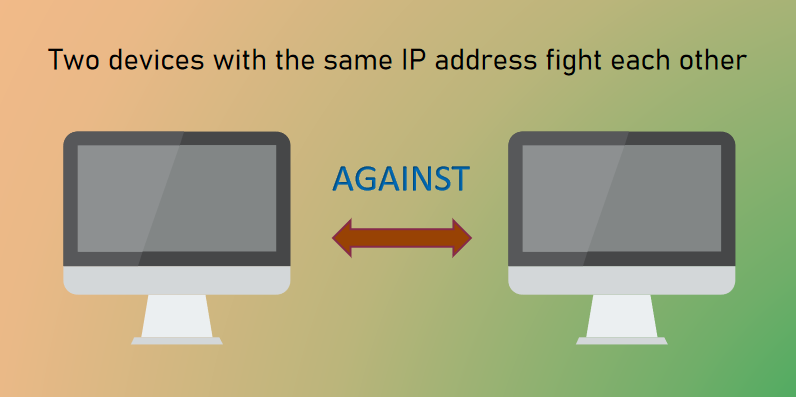
However, if two or more devices are configured with the same IP address and subnet mask, IP address conflicts may occur. This kind of situation generally happens in LAN.Two devices with the same IP address fight each other


How to resolve IP address conflicts?

  • Restart: Attempts to restart the computer and wait for it to retrieve a new IP address. If it still doesn’t work, continue with the following steps.
  • Change the IP address manually: Go to the control panel ➡ Access the network and sharing center ➡Click “Change Settings‘” ➡ Right-click “WLAN” or “Internet“➡ select “Properties“➡ Double-click “Internet Protocol“➡Change the IP address you want

  • Enabling the ARP Firewall: IP address conflicts may also be caused by ARP virus attacks. ARP attacks usually prompt IP address conflicts or even break down the network. First, check and kill the virus, and then installARP a firewall to open an active defense.


Clon Browser

IP addresses can be used to track user location information, so the security of IP addresses is closely related to user privacy and Internet security. In the face of privacy exposure and malicious attacks, a proxy can effectively protect your privacy. Clon Browser works closely with many proxy agents (Such as Luminati, Oxylabs, etc.), Clon Browser’s proxy integration service provides you with strong IP protection.

For more information about IP protection, please click here.

whats make a good 4g proxy

4G Proxy | Optimize your cross-country browsing experience

Proxy server is an Internet server with its own IP address, which is between the user and the Internet. It is the intermediate program between the user’s computer and the Internet site, and also the transfer station of network information.

The proxy server can take the place of user machines to send page access requests to the Internet website, through a series of intermediate operations to provide users with network security filtering services, improve the speed and efficiency of browsing the website, and protect users’ privacy and security.

That is to say, the proxy server is the “firewall” of the users’ network security and privacy and the “accelerator” of Internet browsing.

How does Proxy work?

Proxy is the middle man

When you open an Internet link directly without using a proxy server, the Internet will get the IP address of the users’ computer from the received request signal and send the information back based on the address it has got.

The Computer’s IP address is the Internet equivalent of your address in the real world. In other words, the IP address is your address when you send the letter, and the Internet link you request is where the recipient is located.

When the Internet receives your letter (request signal), your address (IP) also leaves a trace. A proxy server is an intermediate program that is both a server and a client. When your client is connected to it and sends a request signal to the Internet, the proxy server will receive the request and collect the required information from the Internet on your behalf and send it back to your browser so that you can see the link you want to view.

When the proxy server sends your request to the Internet, it can keep the trunk demand and adjusts users’ data at the same time. It helps you to change your IP address and uses proxy addresses for network activity so that the Internet can’t exactly get your location, which can protect personal privacy data and avoid Internet filtering, etc.

At the same time, the vast majority of proxy servers have buffer or cache function, If the resource you request has the latest storage on the memory, it can retrieve data directly from memory and feed it back to your browser, which saves the step of forwarding the request signal to the Internet, so as to improve your browsing efficiency and give you a high experience.

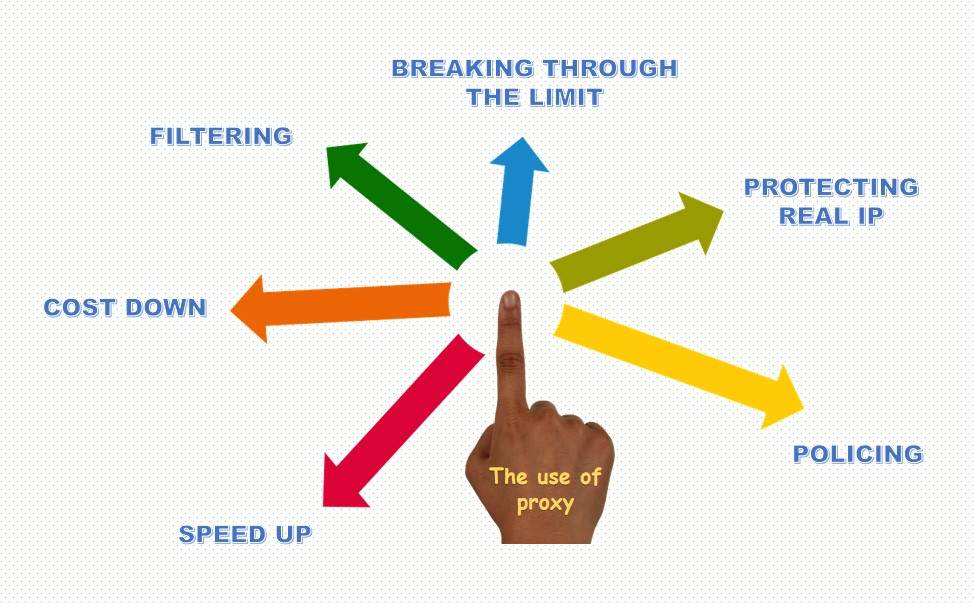
The use of proxy

  • Speed up& cost down: The cache function saves the process of sending signals to the Internet and collecting data, improving users’ browsing efficiency and reduces communication costs.
  • Filtering& policing: It protects against offensive access. The proxy server can monitor and filter dangerous information whether it is the user’s behavior of accessing the Internet or the information feedback from the Internet.
  • Protecting real IP: Hiding IP through proxy servers to protect personal privacy and avoid marketing interference and malicious attacks.
  • Breaking through the limit: In the face of IP blocking or content filtering of foreign websites, you can access foreign websites through proxy servers.

the use of proxy

Why need 4G Proxy?

4G proxy servers, as the name suggests, are associated with mobile devices (phones, tablets, etc.). When you use mobile data to connect to the Internet, the 4G proxy server will provide you with the IP address of the destination region, which allows you to you can browse foreign websites. The IP addresses of 4G mobile proxy will remain in rotation, so you will be using dynamic mobile IP for Internet activities.

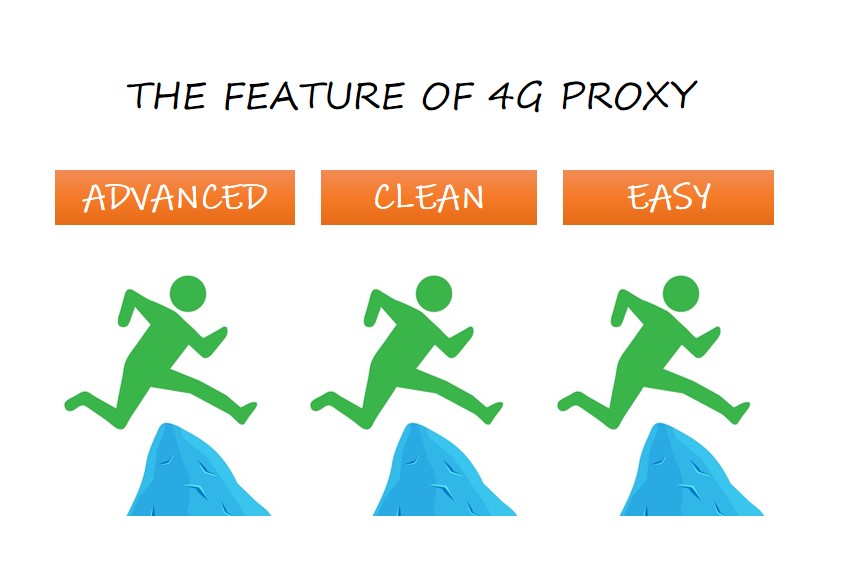
The feature of 4G proxy

  • 4G mobile proxy is the most advanced mobile agent. It Provides users with mobile IP addresses that can be rotated by all devices, and the Internet has a high degree of trust in the IP addresses it provides (because everyone Shared IP, the Internet does not want to reject hundreds of thousands of its customers by banning one IP), Therefore, the performance of 4G proxy service to protect privacy and filtering is strong.
  • 4G mobile proxy provides you with a clean IP address. Because the mobile network uses dynamic IP, the behavior of the last user can affect your use (you may encounter situations where you need to authenticate).
  • 4G mobile proxy is easier and faster to operate. 4G proxy is applicable to all operating systems. The mobile proxy will automatically serve you, so what only you need to do is to check the country to access it, no need to install other software.

the feature of 4g proxy

The difference between 4G proxy and VPN

VPNs and 4G mobile proxies both allow you to break through blockages and hide the real IP address, but there are some differences in details. VPNs need to be served by the corresponding software, and the browsing activities operated in the software will be encrypted, making it impossible for any behavior to obtain your information. But at the same time, you need to pay for the encryption service, so VPNs are usually expensive. What’s more, because the VPN is installed on your device so the process of encryption may slow down your device. Therefore, unless encryption is required, buying a VPN is not recommended.

How to choose 4G proxy?

Whats make a good 4G proxy

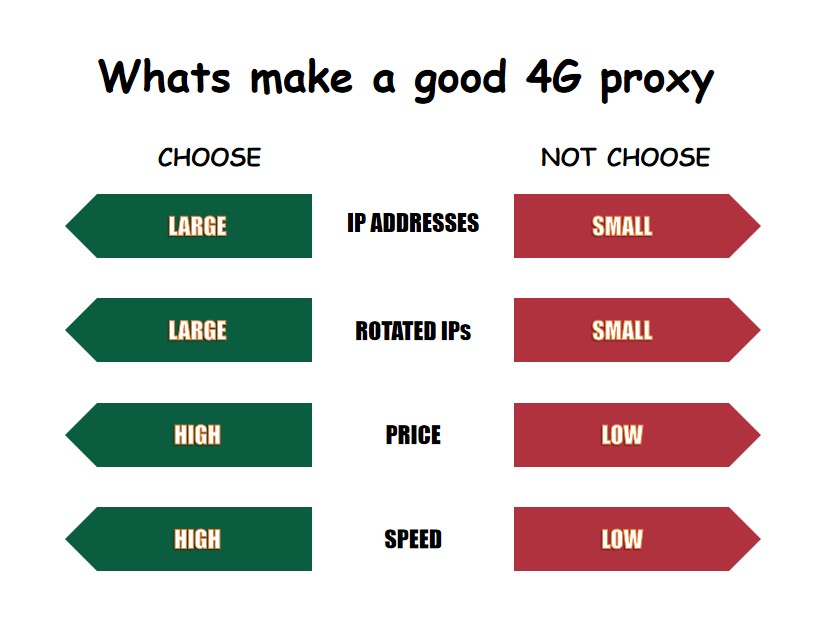
So if I want to buy agency services, what elements should be considered carefully? Here gives some factors to consider:

  • The number of IP addresses: The more the provider offers, the more you can choose, and this large number also implies the power of performance.
  • The number of rotated IPs: You can access multiple websites without any problem by rotated IP.
  • The sharing capability of a mobile proxy: The sharing capability provided by the provider may not be suitable for network scraping.
  • Price: Price also has certain references in measuring the stability of performance. Generally speaking, the more data, the higher the price. At the same time, affordability is a real factor to be considered.
  • Speed: The faster a 4G mobile proxy service runs, the better your experience will be.

whats make a good 4g proxy

Some good providers

When the demand arises, it takes a lot of energy and time to set up a mobile proxy. So in order to meet the demand, the agent service providers were born. In order to accurately find the desired supplier in a complex competitive market of suppliers, it is necessary to investigate the services they provide, and here are several options:

  • Luminati——”Provides the most advanced mobile residential proxy service offering the fastest and largest real-peer 3G/4G IPs network in the world.”: Luminati is the first and largest 4g proxy provider in the market. Luminati’s network has spread all over the world, and you can choose an IP address in any country. Free 7-day trial service is also provided. But the official use is expensive.
  • Soax—— “Cleanest, regularly updated proxy pool available exclusively to you. Over 8. 5M IPs are active worldwide. Flexible targeting by country, region, city, and provider.”: The Soax mobile Agent service is accurate in location coverage which has fully compatible with many use cases. It is affordable and has excellent run time, but maybe slow in customer support.
  • HydraProxy——”The Internet As It Should Be.Limitless.”: The number of IP addresses that HydraProxy has had reached over 200,000 and is affordable. Because only targeted all US States, it has extensive coverage across the United States and is available in all states.
  • Proxy-cheap—— “Best Value! No monthly commitment. No additional fees. “: As a proxy supplier known for its cheap, it is very safe and reliable. Its target market is the European Union and the United States. Free trial is available but there is no refund.
what is a browser fingerprint

Everything You Can Know About Browser Fingerprints

What is a Browser Fingerprint?

Browser fingerprinting is a method of tracking the web browser through the configuration and setting information that the browser can see on the website.

Browser fingerprints are like fingerprints on our hands, with individual recognition.

Formally because of the folds of the human skin, a unique human fingerprint is formed that is different for everyone.

what is a browser fingerprint

The same is true for the browser fingerprint. Obtain the recognizable information of the browser and perform some calculations to get a value. Then this value is the browser fingerprint.

Recognizable information includes language, time zone, user agent, geographic location, etc. The information you select determines the accuracy of the browser fingerprint.

Obtaining fingerprints has no real meaning for the website, and more importantly, the user information corresponding to the fingerprints.

As a website, collecting user browser fingerprints and recording user operations is a valuable behavior, especially for scenarios where there is no user identity.

For example, on a content distribution website, user A likes to browse military content, and the browser fingerprint can record this interest. Then the user can push military information to user The next time without logging in to the website.

At the moment when personal PCs are so popular, this is also a way of content distribution.

For users, establishing a connection between personal surfing behavior and browser fingerprints more or less infringes on user privacy.

Fortunately, this method has limited infringement on users’ privacy, and abusive user behavior will also overdraft the user’s favor on the site.

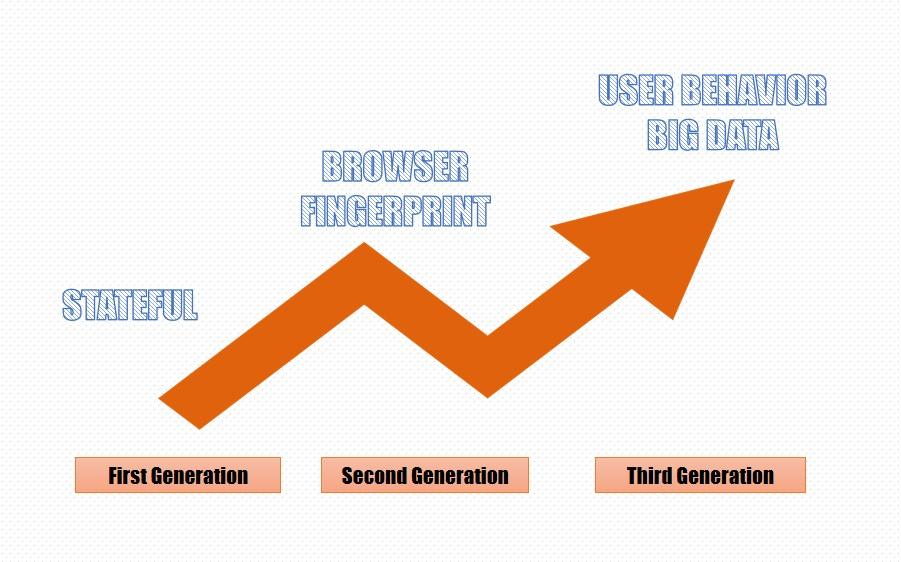
The development of browser fingerprinting

First generation: stateful

The main focus is on the user’s cookie, which requires the user to log in to obtain effective information.

Second generation: browser fingerprint

Make users more distinguishable by continuously increasing the feature value of the browser.

For example UA, a browser plug-in, Canvas, AudioContext information, etc.

Third generation: user behavior big data

By collecting user behaviors and habits to build feature values and even models for users, real tracking technology can be realized. This part of the current implementation is relatively complicated and is still being explored.
the development of browser fingerprinting

How to get the browser fingerprint

Get browser fingerprint from HTTP

Entropy is the average amount of information contained in each message received. The higher the entropy, the more information can be transmitted, and the lower the entropy, the less information is transmitted.

Browser fingerprints are synthesized from the feature information of many browsers, and the information entropy of feature values is also different.

You can check your browser fingerprint ID and basic information here.

Browser fingerprints can also be simply divided into ordinary fingerprints and advanced fingerprints.

Ordinary fingerprints can be understood as parts that are easy to find and easy to modify.

For example, HTTP header

{

“headers”: {

“Accept”: “text/html,application/xhtml+xml,application/xml;q=0.9,image/avif,image/webp,image/apng,*/*;q=0.8,application/signed-exchange;v=b3;q=0.9”,

“Accept-Encoding”: “gzip, deflate, br”,

“Accept-Language”: “zh-CN,zh;q=0.9”,

“Host”: “httpbin.org“,

“Sec-Ch-Ua”: “\” Not A;Brand\”;v=\”99\”, \”Chromium\”;v=\”90\””,

“Sec-Ch-Ua-Mobile”: “?0”,

“Sec-Fetch-Dest”: “document”,

“Sec-Fetch-Mode”: “navigate”,

“Sec-Fetch-Site”: “none”,

“Sec-Fetch-User”: “?1”,

“Upgrade-Insecure-Requests”: “1”,

“User-Agent”: “Mozilla/5.0 (Windows NT 10.0; Win64; x64) AppleWebKit/537.36 (KHTML, like Gecko) Chrome/90.0.4430.93 Safari/537.36”,

“X-Amzn-Trace-Id”: “Root=1-6103c0a2-2deb3a391be2e99a38b1f813”

}

}

Use the tool to query.

In the above, we can see the browser’s Accept-Language and User-Agent, through which the language information of the browser can be obtained.

This HTTP header entity information may be generated by your current operating system language or the language information set by the browser.

This header is not necessarily accurate. Some websites will ignore this header and use ip to determine the language of the user’s region.

User-Agent contains information about the browser and operating system.

For example, I am currently using MacOS and I am using version 77 of Chrome.

If the UA is deliberately faked in the header, the webpage can also get the real UA through navigator.userAgent.

Other basic information, such as IP, physical address, geographic location, etc. can also be obtained.

Use the tool to query.

Other ways to get browser fingerprints

In addition to fingerprints obtained from HTTP, browser characteristic information can also be obtained in other ways.

1. User-agent string for each browser

2. HTTP ACCEPT header sent by the browser

3. Screen resolution and color depth

4. System setting time zone

5. Browser extensions/plugins installed in the browser

For example, Quicktime, Flash, Java or Acrobat, and the versions of these plug-ins

6. Fonts installed on the computer, font fingerprint technology

7. Whether the browser executes JavaScript scripts

8. Browser cookie

9. Hash of the image generated by Canvas fingerprint

10. Hash of the image generated by the WebGL fingerprint

11. Whether the browser is set to “Do Not Track”

12. the system platform

For example Win32, Linux x86

13. System language

For example, cn,en-US

14. Does the browser support touch screen

15. Hardware concurrency

16. TLS/SSL
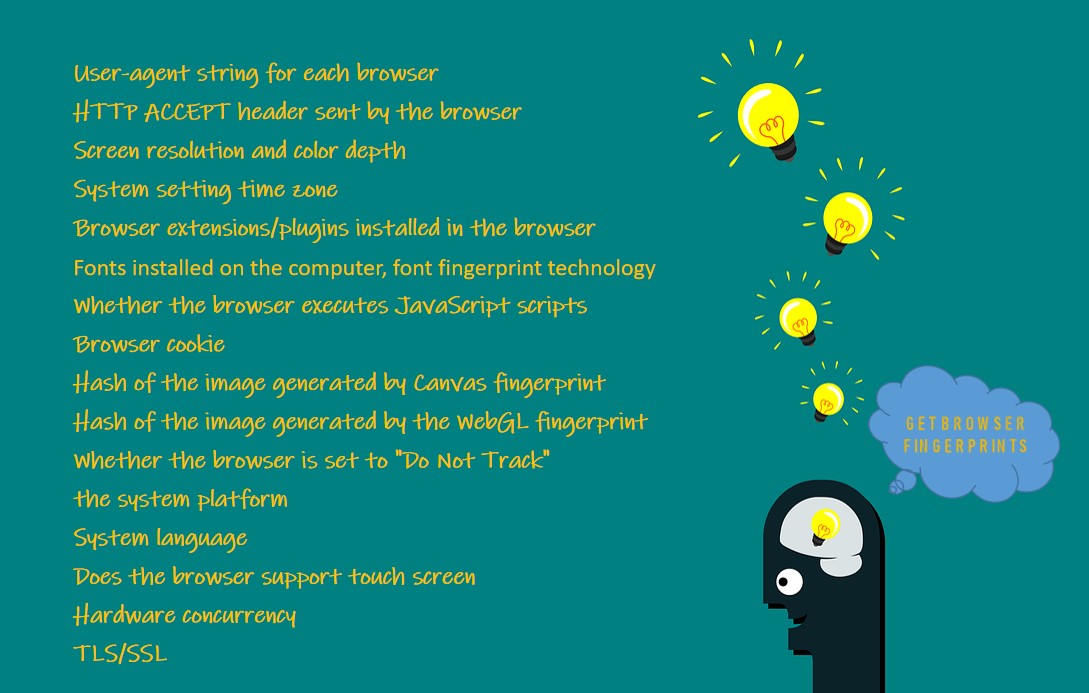
After getting these values, you can perform some calculations to get the specific information entropy of the browser fingerprint and the UUID of the browser.

The integrated fingerprint information can greatly reduce the collision rate and improve the accuracy of the client UUID.

Fingerprints also have rank. Some feature values with larger information entropy will have larger ranks.

The information described by ordinary fingerprints is still not unique enough, after all, there are still very many people using MacOS in the United States.

Advanced fingerprints can further narrow this range, and can almost directly determine a unique browser identity.

Types of browser fingerprints

Canvas fingerprint

Canvas is a dynamic drawing tag in HTML5, and it can also be used to generate pictures or process pictures.

The same HTMLCanvasElement element drawing operation, on different operating systems and different browsers, the content of the pictures produced is not exactly the same.

In terms of image format, different browsers use different graphics processing engines, different image export options, and different default compression levels.

At the pixel level, the operating systems each use different settings and algorithms for anti-aliasing and sub-pixel rendering operations.

Even with the same drawing operation, the CRC check of the generated picture data is different.

Canvas has been supported by almost all major browsers and can be accessed through most PCs, tablets, and smart phones.

Use the tool to query.

WebGL fingerprint

The WebGL object (canvas.getContext(“WebGL”)) can be obtained through the HTMLCanvasElement element, and the user’s hardware information can be obtained through this object.

Graphics card name, Graphics card model, Graphics card manufacturer, etc.

For example: ANGLE (NVIDIA GeForce GTX 1050 Ti Direct3D11 vs_5_0 ps_5_0), Google Inc.

Since the hardware is generally not replaced at will, some computers have not been replaced when they are scrapped.

There are also many types of computer hardware. Although the collision rate is very large, it can still be used as part of the user’s fingerprint.

The more information collected from a user, the more it can represent the user’s unique fingerprint, which cannot be ignored.

Use the tool to query.

AudioContex fingerprint

The Audio API provided by HTML5 for JavaScript programming allows developers to directly manipulate the original audio stream data in the code.

Be randomly generated, processing, recycling, such as raising the tone, pitch change, audio division, and even can be called Web version of Adobe Audition.

AudioContext fingerprint principle is as follows:

Method 1: Generate an audio information stream (triangular wave), perform FFT transformation on it, and calculate the SHA value as a fingerprint.

Method 2: generating an audio stream (sine wave), the dynamic compression processing, MD5 value is calculated.

Both methods are cleared before the audio output to the audio device, the user simply unaware it was acquired fingerprint.

AudioContext fingerprint basic principles:

The subtle differences in the hardware or software of the host or browser cause differences in the processing of audio signals.

The same type of the browser on the same device produces the same audio output.

Different machines or different browsers generate audio output will be different.

It can be seen from the above that AudioContext and Canvas fingerprint principles are very similar.

Both use the difference in hardware or software. The former generates audio, the latter generates pictures, and then calculates different hash values as identification.

Use the tool to query.

WebRTC fingerprint

WebRTC (Web Real-Time Communication) is the ability for the browser to have real-time audio and video communication.

It provides three main APIs to allow JS to obtain and exchange audio and video data in real-time, MediaStream, RTCPeerConnection, and RTCDataChannel.

Of course, if you want to use WebRTC to obtain communication capabilities, the user’s real IP must be exposed (NAT penetration), so RTCPeerConnection provides such an API.

You can get the user’s IP address directly by using JS.

Cross-browser fingerprint

The browser fingerprints mentioned above are all obtained from the same browser.

However, many feature values are unstable. For example, UA and canvas fingerprints will be completely different when opened in different browsers on the same device.

The same set of browser fingerprint algorithms is not available on different browsers.

Cross-browser fingerprinting is a stable browser feature that can obtain the same or similar value even on different browsers.

How to protect the browser fingerprint

If you do not have enough professional knowledge or change browser information very frequently, almost 100% of your browser fingerprints will be leaked. Of course, this is not necessarily a bad thing.

The leaked privacy is very one-sided, and it can only be said that it has leaked part of the user’s behavior when browsing the web.

Insufficient value, user behavior does not correspond to actual accounts or specific people, and the value generated is limited.

Beneficial use, use browser fingerprinting can produce user isolation part black, part to prevent brush votes or malicious behavior.

But even so, browser fingerprints have some preventive measures.

Do Not Track

In the HTTP header, you can declare such a flag “DNT” means “Do Not Track”, if the value is 1, it means not to track my webpage behavior, and 0 means it can be tracked.

Even if there is no cookie, you can tell the server that I don’t want to be tracked and don’t record my behavior through this flag.

The bad news is that most websites currently do not abide by this agreement and completely ignore the “Do Not Track” signal.

ClonBrowser

Through the above-mentioned understanding of browser fingerprints, it is not difficult to find that the more features your browser has, the easier it is to be traced.

On the contrary, if you want to deliberately hide certain browser features or make magic changes, then congratulations, your browser may have a unique browser fingerprint, and you don’t need to deliberately calculate it, you can directly communicate with other people distinguish.

Therefore, an effective method is to popularize the feature values as much as possible.

For example, the most widely available combination on the market is Window 10 + Chrome.

Then you change the UA to this combination is an effective method, and at the same time try to avoid the website from acquiring feature values with very high information entropy, such as canvas fingerprints.

ClonBrowser browsers do a lot of work on this to prevent them from being used to track ClonBrowser users.

In response to Panopticlick and other fingerprinting experiments, the ClonBrowser browser now includes some patches.

To prevent font fingerprints, by restricting the fonts that can be used by the website and Canvas fingerprints, it is prevented by detecting the reading of HTML5 Canvas objects and requiring user approval.

For example, the code for obtaining Canvas fingerprints above, in ClonBrowser, you can choose to close, noise, block and other settings to adapt to your business scenarios.

In summary, these measures make the ClonBrowser browser a powerful defense tool against fingerprints to protect your privacy.

track user browsing behavior

Canvas Fingerprint Knowledge, Leak, Block and Change

There are many ways to track visitor information on the Internet, such as the more traditional cookie technology. Nowadays, the most widely used technology is Canvas Fingerprint. Many websites and tracking software are using Canvas Fingerprint.

What is a canvas fingerprint?

Canvas fingerprinting is a technique for tracking visitor information. The browser will use a variety of image processing engines, export options and compression levels. Therefore, the graphics drawn by different browsers are also different.  These graphics are specific fingerprints for the user’s device, which can be used to distinguish and identify different users. Users don’t often change hardware devices in their daily lives.  Canvas fingerprints can well identify the user’s browser.  However, canvas fingerprints also have some problems.  When the user’s hardware devices and browsers are exactly the same, the canvas fingerprints are also very easy to be the same.  At this time, some auxiliary verification information is needed.

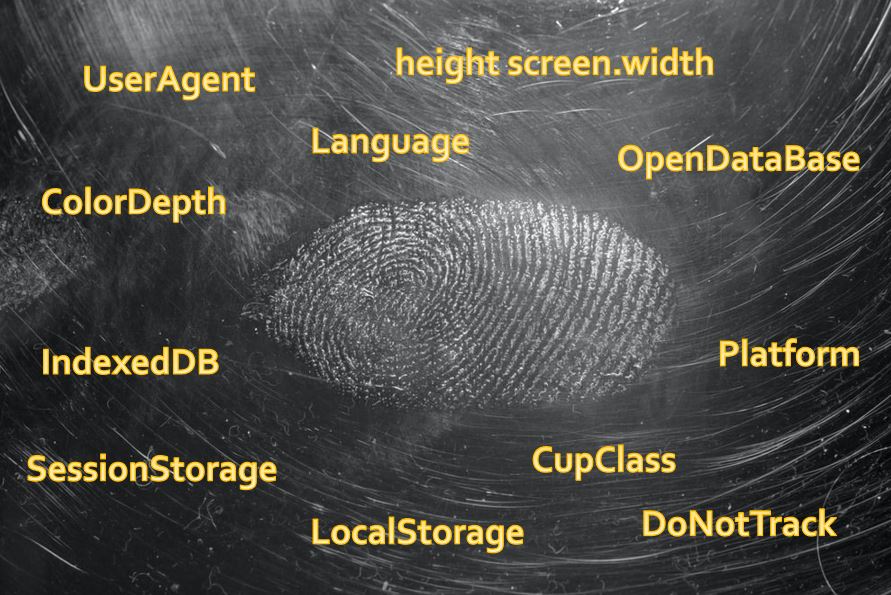
What factors can support canvas fingerprinting improvements:

  • UserAgent
  • Language
  • ColorDepth
  • height screen.width
  • SessionStorage
  • LocalStorage
  • IndexedDB
  • OpenDataBase
  • CupClass
  • Platform
  • DoNotTrack

support canvas fingerprinting improvements factors

Use of Canvas Fingerprint

Online advertising companies need to track user behavior so as to understand each user’s browsing preferences and establish user interest tags.

The all-around tracking information makes it easy for advertisers to understand the consumer preferences of users, so that they can recommend more suitable advertisements according to different users, making it easier to close the deal.

track user browsing behavior

This is a good thing as well as a bad thing.  When users enjoy more accurate recommendations, they also lose most of the right to choose freely.

The development status of canvas fingerprints

Today, canvas fingerprints have become the most important visitor tracking technology.  HTML5 canvas technology can not only process pictures but also monitor the user’s keyboard, mouse, touchpad and other input events.  The HTML5 canvas technology has been supported by most mainstream browsers, and it is difficult to stop.  As long as the Internet is accessed through the browser, all behaviors will be tracked.

How to prevent canvas fingerprints from leaking

How to change the canvas fingerprint

Canvas fingerprints can be forged and tampered with.  By intercepting the JavaScript function, the return result of the function is modified, and the returned fixed data becomes unfixed data.  Canvas fingerprints are mainly obtained through JavaScript.  If the important functions of JavaScript can be controlled, the forgery and tampering of canvas fingerprints can be realized.

Canvas fingerprint Defender

Canvas fingerprint defender is a browser plug-in, applicable to Chrome and Firefox, which can change canvas fingerprint by adding noise in the browser.  Canvas fingerprint defender will not completely block the canvas element of the browser.  Blocking the canvas completely will cause some website functionality loss.

canvas fingerprint defender

After installing Canvas fingerprint defender, it will do the following:

var inject = function (){

const toBlob = HTMLCanvasElement.prototype.toBlob;

const toDataURL = HTMLCanvasElement.prototype.toDataURL;

const getImageData = CanvasRenderingContext2D.prototype.getImageData;

// var noisify = function (canvas, context) { const shift = { ‘r’: Math.floor(Math.random() * 10) – 5, ‘g’: Math.floor(Math.random() * 10) – 5, ‘b’: Math.floor(Math.random() * 10) – 5, ‘a’: Math.floor(Math.random() * 10) – 5 };

// const width = canvas.width, height = canvas.height; const imageData = getImageData.apply(context, [0, 0, width, height]); for (let i = 0; i < height; i++) { for (let j = 0; j < width; j++) { const n = ((i * (width * 4)) + (j * 4)); imageData.data[n + 0] = imageData.data[n + 0] + shift.r; imageData.data[n + 1] = imageData.data[n + 1] + shift.g; imageData.data[n + 2] = imageData.data[n + 2] + shift.b; imageData.data[n + 3] = imageData.data[n + 3] + shift.a; } }

// window.top.postMessage(“canvas-fingerprint-defender-alert”, ‘*’); context.putImageData(imageData, 0, 0); };

// Object.defineProperty(HTMLCanvasElement.prototype, “toBlob”, { “value”: function () { noisify(this, this.getContext(“2d”)); return toBlob.apply(this, arguments); } });

// Object.defineProperty(HTMLCanvasElement.prototype, “toDataURL”, { “value”: function () { noisify(this, this.getContext(“2d”)); return toDataURL.apply(this, arguments); } });

// Object.defineProperty(CanvasRenderingContext2D.prototype, “getImageData”, { “value”: function () { noisify(this.canvas, this); return getImageData.apply(this, arguments); } });

// document.documentElement.dataset.cbscriptallow = true;};

The three functions toBlob, toDataURL, and getImageData are redefined in the code.  When the canvas drawing pattern calls these three functions through JavaScript, it will be interfered with randomly generated data, so that the canvas fingerprint is no longer unique.

How to block canvas fingerprints

Use Clonbrowser. Clonbrowser is a virtual browser that realizes the complete independence of canvas fingerprints by setting UserAgent, HTTP headers, Plugins, MymeTypes, WebGL and Geopositio and other parameters. Although the canvas fingerprint is not completely shielded, it allows you to have one or more separate browser environments, and it is very safe.

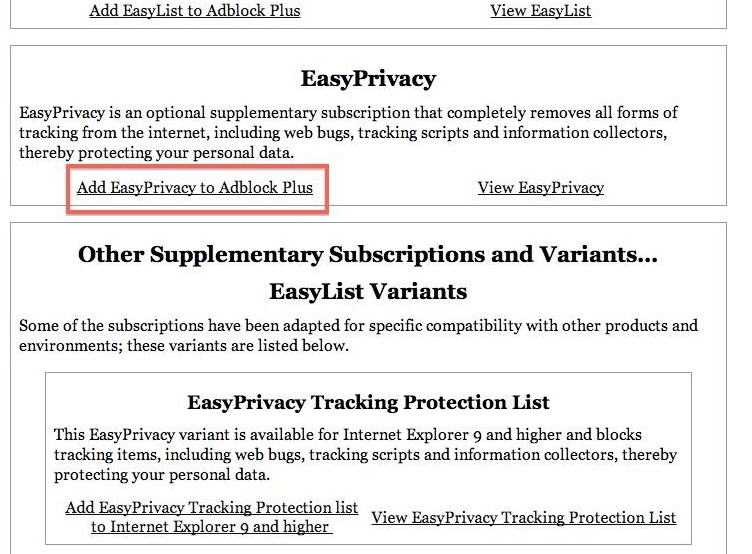
Use Adblock Plus. Adblock Plus is a browser plug-in that can block advertisements and pop-up windows, as well as prevent the enablement of canvas fingerprint scripts.

But Adblock Plus is best used with the EasyPrivacy list.

add easyprivacy to adblock plus

Disable JavaScript.  Canvas fingerprints are obtained through JavaScript, and cannot be formed without JavaScript canvas fingerprints.  However, most websites rely on JavaScript to load important content. If JavaScript is disabled, you will not be able to access the website normally.

Use Tor Browser. Tor Browser can help you effectively block canvas fingerprints through a complex proxy and encryption technology.

Summarize

The development of HTML5 is ever-changing, and canvas fingerprint technology is widely used because of its convenient and easy-to-use characteristics. For industries such as e-commerce and social media, canvas fingerprints have indeed brought a lot of convenience to users. But at the same time, the security of personal information has also become a problem. As people’s awareness of safety increases, more and more solutions are proposed. I believe there will be more balanced security solutions in the future.

Use proxy IP technology

How to protect your IP address

The part of our daily Internet that easily exposes personal privacy is the public IP of our computer.

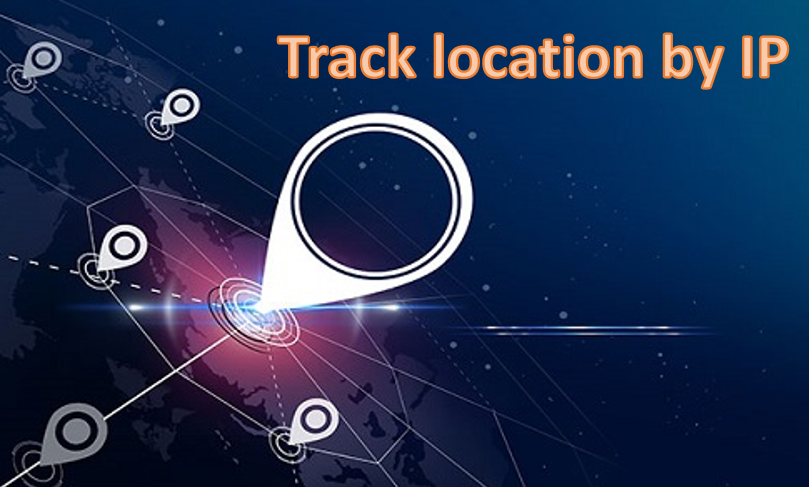
Track location by IP

What user privacy will be leaked by IP?

IP can be used to track our location information. Identify people through location (geographical location) and equipment (mobile phone, computer, etc.) and through time correlation analysis.
To put it simply, it is possible to use IP tracking to obtain that a person accessed the Google website through a computer at an address in New York, USA at 14:30 today.

The problem is coming?

  • How to use technology to protect our IP from being tracked?
  • How to protect your online privacy from being detected by people with ulterior motives?

Here are several relatively effective solutions to protect your IP privacy.
Why is it relatively effective? Because the technologies themselves are advancing with each other, there is no absolutely safe technology.
Technology itself is a race.

1. Use VPN to protect your IP

This is the most common way and the simplest to operate.

Use VPN to protect your IP

First, let me explain what a VPN is.

VPN full name: Virtual Private Network

VPN is defined as the establishment of a temporary and secure connection through the Internet, which is a safe and stable tunnel through a chaotic public network. Using this tunnel, data can be encrypted several times to achieve the purpose of using the Internet safely, which is widely used in corporate offices.

The virtual private network can also be an extension of the corporate intranet. Virtual private networks can help remote users, company branches, business partners, and suppliers establish reliable and secure connections with the company’s intranet, and are used to cost-effectively connect to business partners and users’ secure extranet virtual private networks.

Therefore, many office workers also need to establish a VPN connection on their own computers to facilitate remote office work and so on.

Turn on the VPN on the device we want to surf the Internet and connect to the VPN network, so that our public network IP will be turned into an exit IP of the VPN network.

The export IP of VPN may be anywhere in the world.

In this way, an American user IP can use VPN to become a Japanese export IP.
The cracker will always see the export IP of the VPN, thus protecting our IP.

2. Use proxy IP technology

Use proxy IP technology

A proxy server is also called proxy IP, its function is to proxy network users to obtain network information.

To put it vividly: it is a transfer station for network information.

The proxy server is like a big Cache, which can significantly improve browsing speed and efficiency.
More importantly: Proxy Server is an important security function provided by Internet link-level gateways.

The main functions are:

  • Breaking through its own IP access restrictionsnetwork users can access the target website through the proxy IP, The proxy IP can be in any country, thus breaking through the blockade of certain target websites for specific regions.
  • To improve the access speedusually, the proxy server sets a larger hard disk buffer.  When external information passes through, it also saves it in the buffer.  When other users access the same information again, the buffer is directly used.  Take out the information from it and pass it to the user to improve the access speed.
  • Hiding the real IPInternet users can hide their IPs through this method to protect their privacy from attacks.

But what I want to remind here is that proxy IP is actually divided into the hidden proxy, anonymous proxy, and transparent proxy. Only by using high anonymity proxy IP can the real IP address be completely hidden.


  • Using a transparent proxy IP, the other party can see the proxy IP you use and your real IP.
  • Using an anonymous proxy IP, the other party knows that you have used the proxy IP and cannot directly see your real IP address, but you can still see it through some means.
  • Using high hidden proxy IP, you can completely hide the real IP address.

3. Combine the springboard network

The first two daily-used technical solutions can simply protect the IP privacy of the target website. But if the other party is a hacker with ulterior motives and has certain public rights. We need to use a more professional springboard network.

The springboard network generally implements the complexity of the entire link tracking through a huge multi-node agent network. Springboard network has features such as update and maintenance cycle change, zero logs, etc., which can further protect users.

For example, TOR (software that provides springboard network services) server does not record logs, but third-party servers cannot control it.

However, the mechanism of TOR is to update the link every ten minutes, so the real IP cannot be traced under the current human computing power.

The record of ISP depends on the laws of each country.

For example, in Romania, Ceausescu used the Typewriter Act in history, which caused serious harm to the country.

Therefore, the citizens attach great importance to privacy protection. The log records of domestic ISPs are not mandatory, but customer information is required to be protected. Therefore, most service providers do not record them. VPN service providers that claim to protect privacy will recommend users to use Romanian servers because there is no need to log logs there. But in fact, no country will track an IP across the border. This has political issues.

Regarding the springboard network, it has gone beyond the scope of our IP privacy protection. Our daily scenarios are for fair services (different services of certain target websites to regions) and fast and effective network access. Oppose some illegal privacy tracking and protect your online identity instead of sabotaging and attacking.

What are cookies on a website

The definition of cookie, what is cookie

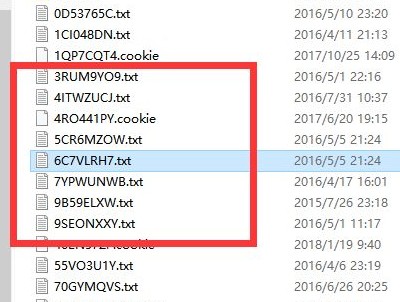
Cookie is a plain text file saved in the client, used to record the status of the user’s access to the server. When a user uses a browser on a computer to access a web page, the server will record the user’s current state value, and generate a certificate to the browser, which is recorded in the local computer.

This certificate is a cookie. 

this is a cookie

Cookies have a validity period. During the validity period of the cookie, when the user visits the same server again, the browser will send the cookie to the server. The server will identify the cookie to determine the user’s identity, and then provide the user with the corresponding resources and content.

The birth of cookies

With the development of the Internet, people are no longer satisfied with basic web services and have greater demands for the convenience and ease of use of web services. At the same time, it is hoped that the server can record the activity status of different users, even in complex Internet interactions, Can also accurately provide users with resources and content.

As we all know, the transmission of Internet information relies on the HTTP protocol, but the HTTP protocol is stateless. The server cannot determine the user’s identity through the http protocol, nor can it record the user’s status, which causes the user to be unable to obtain the previous information each time they visit. If you want to continue the previous information, you must retransmit it, which is very troublesome and inefficient.

For example, You have carefully selected 10 items on Amazon and put them into the shopping cart. At this time, you accidentally closed Amazon. When you open Amazon again, you definitely hope that the 10 items are still in the shopping cart.

The HTTP protocol cannot help you. But cookies can.

save your access state

When the demand for dynamic interaction between the client and the server is increasing, technical means to save the state of web services have emerged. The most familiar one is the cookie, and there is another technology called session.

Cookie attributes

A cookie is composed of several attributes, and they respectively record some information, such as the effective time, which domain name is sent to, which path is stored in, and so on.      Cookie attributes include Name/Value, Expires, Path, Domain, Secure, Httponly.

The attributes are separated by semicolons and spaces. Each attribute can be set If not set, use the default value.

Detailed introduction of cookie attributes:

Name/Value attribute: Set the name of the cookie and the corresponding value, name it with letters and numbers, and cannot use special characters.

Expires attribute: Set the expiration time of the cookie.  During this time, the cookie is valid.  The browser will clear the cookie after the time expires.  The expires attribute must be a time in GMT format.  If the expires attribute is not set, the cookie will be cleared immediately after closing the browser.

Path attribute: Set the path where cookies can be accessed on the website, usually set to “/”, which means that all pages on the site can access cookies.

Domain attribute: Set which websites can access cookies, the domain attribute and path attribute are used together to set which URLs can access cookies.

Secure attribute: The cookie can only be sent under the secure protocol. By default, the cookie does not have the secure attribute. Both the HTTP protocol and the HTTPS protocol can access the cookie. After the secure attribute is set, only the HTTPS protocol can access the cookie.

Httponly attribute: Setting cookies cannot be accessed through forms other than the HTTP protocol. Under normal circumstances, the client can read, modify, and delete cookie information through JavaScript code. After setting the Httponly attribute, JavaScript can no longer access the cookie, which helps to protect the cookie. Will not be maliciously stolen and tampered with.

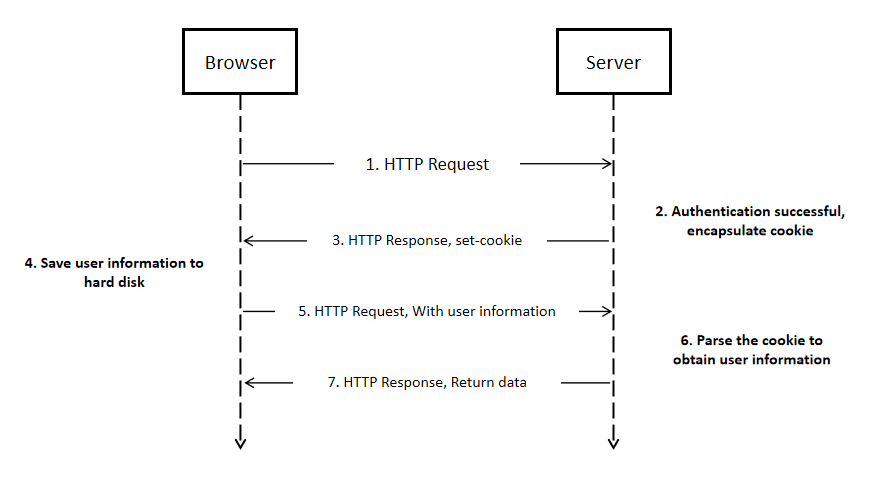
How cookies work

how cookie works

When a user visits a website, the cookie generation will go through the following steps:

Step 1: The client sends a request to the server.

Step 2: After the server receives the client’s request, it will generate a set-cookie head based on the client’s information, and send it back to the client to establish a session.

Step 3: The client receives the information and if it is determined to establish a session, it will store the cookie file on the local hard disk.

Step 4: When the client sends a request to the server again, the browser will look for the corresponding cookie file according to the website domain name, and if found, it will send the cookie content to the server.

Step 5: After the server receives the request containing the cookie, it will generate a page that meets the needs of the client and send it to the client based on the relevant user information stored in the cookie.

The basic operation of cookies

  1. Set cookies on the client

On the client-side, the cookie can be set through JavaScript, and the value of the cookie can be set by executing the code.

E.g: document.cookie=”expires=Thu, 26 Feb 2116 11:50:25 GMT; domain=www.clonbrowser.com; path=/”;

When we check the cookie panel of the browser, we can see that the expires, domain, path, and other attributes have been set successfully.

Note: The client can set attributes including expires, domain, path, secure, but cannot set Httponly attributes.

  1. Set cookies on the server

Through the above, we have learned that when the client sends a request to the server, the server will send a set-cookie, which is used by the server to set the cookie.

Note: The server can set all cookie attributes

  1. Set multiple cookies at the same time

If you want to set the attributes of multiple cookies, you can implement it by repeatedly executing JavaScript code in multiple lines.

  1. Modify cookie

If you want to modify an attribute of the cookie, you only need to modify the attribute value of the cookie, and the new attribute value will overwrite the old attribute value.

Note: When modifying the cookie, the domain and path attributes must be consistent, otherwise a new cookie will be generated.

  1. Delete cookie

If you want to delete the cookie, you need to reset the expires attribute of the cookie and set a time in the past, so that the cookie will naturally become invalid.

Security issues with cookies

Why cookies are not secure

Cookies are stored in the user’s local computer. Personal computers are often less secure and can easily be intercepted and stolen by other hackers.

What are the security risks of cookies

  1. Cookie spoofing

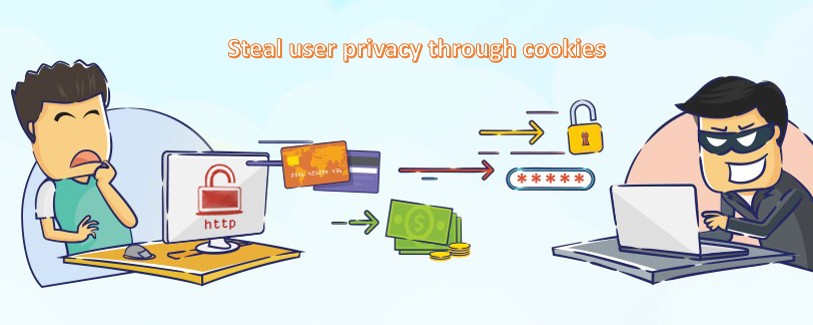
Cookie spoofing is caused by cookie leakage. Cookies are easily discovered and intercepted during network transmission, especially the transmission of HTTP protocol.   When hackers get the cookie, they can log in to the corresponding website as a fake user and obtain the user’s privacy information.

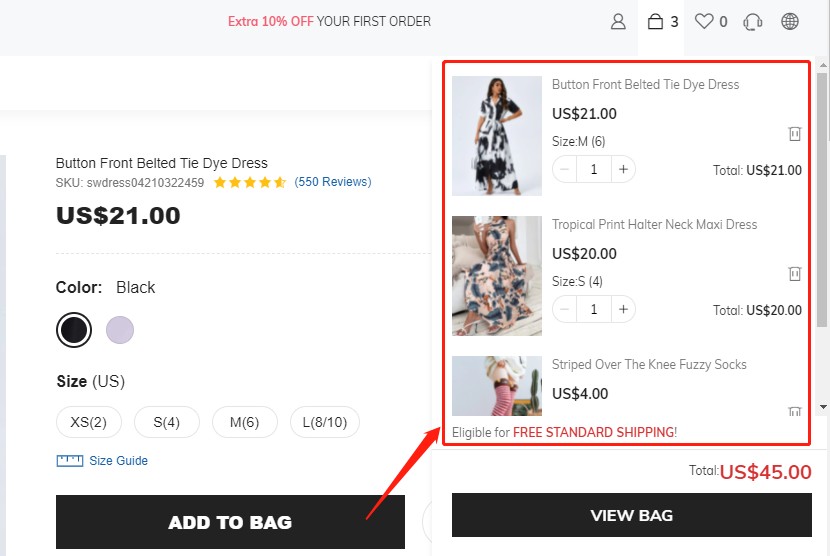
Steal user privacy through cookies
  1. cookie injection

Cookie injection is the opposite of cookie spoofing. Cookie injection allows users to log in to cookies that have been tampered with without their knowledge. Cookie injection requires high technical means. Experts can often achieve precise attacks, which are extremely concealed and difficult to be discovered.

  1. Malicious cookie code

The cookie itself is an ordinary text file. If you use a special markup language to embed executable code in the cookie, you may further steal user identity information.

How to protect cookie security

Cookies are stored as plain text files on the computer. In theory, attacking cookies will not cause great harm to the user’s computer. However, there are still many hidden dangers in the leakage of cookies. If it is leaked, the user’s web access information will no longer be safe, private Data can be easily stolen.

It is also essential to protect the safety of cookies. Introduce some methods to make your cookies more secure.

  1. Cookie expiration period becomes shorter

Setting the validity period of the cookie shorter is a simple and effective method, which makes the security of the cookie controllable.

  1. Set Httponly attribute

The Httponly attribute can prevent the cookie from being accessed by JavaScript, which can improve the security of the cookie.

  1. Set the secure attribute

The Secure attribute allows cookies to be accessed only by the HTTPS transmission protocol, which is more secure than the HTTP protocol.

  1. Set complex cookie
  • Randomly generate the key value of the cookie
  • Use complex cookie naming
  • Increase the difficulty of cookie decryption as much as possible, and protect cookie information
  1. Strengthen the security protection of the database

If the database is sufficiently secure, even if a cookie is leaked, the loss caused will be greatly reduced

  1. Use session and cookie at the same time

Session and cookie are both methods used to store user web information. The difference is that the cookie is stored on the client-side and the session is stored on the server. While using the cookie to record the information, it can be verified on the server-side through the session, which can be extra insurance.

The importance of information security

Our lives are inseparable from numbers, and people rely on information technology more than ever. Information technology is inseparable from the use of medical equipment in hospitals, security systems and smart phones. Computerized equipment plays an important role around people. Information security has become a basic requirement of human life.

Information technology is not only a basic requirement of life, but also very important to work and business. Information is one of the most important intangible assets, and managers have the responsibility to protect the confidentiality of important information, because information technology carries a lot of sensitive data and customer information. Its history can be traced back to 1980, when the use of computers was limited to computer centers, and the security of computers represented the physical computing infrastructure. Today, the openness of the Internet simplifies the process of internal information storage. The world is rapidly transforming from an industrial economy to a digital society. With the development of information technology, people’s demand for information security is increasing.

What is information security?

Information security, also known as Infosec. It is to establish technical management security protection for the data processing system, the purpose is to protect the computer hardware, software, and data from being damaged, modified and leaked by malicious factors. At the same time, it is responsible for protecting data and ensuring its confidentiality, integrity and availability. And, in the concept of information security, they are called information security principles:

1.Confidentiality: data cannot be accessed without authorization;

2.Integrity: the data will remain unchanged and remain valid;

3.Availability: Managers who have the right to access the information can obtain the information.

What are the types of information?

Information is divided into public and confidential. Anyone can access is public, while information that only individuals can access is confidential.

1.Public information

It is generally believed that there is no need to protect public information. Although the principle of confidentiality does not apply to public information, it is still necessary to ensure that public information is complete and accessible. Therefore, information security also applies to handling public information. For example: online store. Product details, blog posts, seller contact information, etc., all key information is publicly available and anyone can view it. But the online store still needs to be protected to ensure that no one will disrupt the work.

2.Confidential information

Personal information: information about a specific person (name, ID, phone number, physical characteristics, marital status and other data), anyone has an obligation to protect it and not to transfer it to others;

Trade secrets: internal information about the company’s work (technology, management methods, customer base). If the outside world knows this data, the company may lose profits. The company has the right to decide on its own trade secrets and publicly available information, but it does not mean that all information is classified as trade secrets, such as legal representative.

Professional secrets: medical, notarization, lawyers and other types of secrets related to professional activities.

Official secrets: including known information such as taxes or registered companies. Government agencies usually store this data, they have a responsibility to protect it, and only provide it on request.

State secrets: including military information, intelligence data, information about the economy, national science and technology, and foreign policy. This data is a high-level secret, and the system security for storing such information is very strict.

Of course, if the company stores personal data, business or professional secrets, that data must be specially protected, and it is also necessary to restrict unauthorized persons from accessing it. You can usually set the access level and password; install security software; configure encryption. The main task of information security is not only to protect confidential information, but to avoid illegal behaviors and adverse consequences caused by malicious behaviors.

Why pay attention to information security?

Before the advent of the digital age, people locked important documents in safes, hired security guards, and encrypted them on paper to protect data. However, with the rapid development of the Internet, data also faces a large number of different types of risks. For example, threats such as computer hackers, malicious code and denial of service DOS attacks have become more and more common. The implementation, maintenance and update of information security are also huge challenges facing the current group. With information security, information and technology can be protected by responding to, preventing, and detecting internal and external threats.

According to McAfee, losses related to information security and cybercrime currently exceed 200 billion U.S. dollars, and have grown to 250 billion U.S. dollars in recent years, indicating that more sophisticated hacking has increased significantly. Because digital information is getting more and more protected, most people will use antivirus software and use encryption methods to encrypt digital information. However, digital information needs not only virtual protection, but also physical protection. If outsiders steal important data, antivirus software will not help. Therefore, they are placed in a protected storage space.

What are the threats to information security?

Understanding potential threats and security vulnerabilities is very important for choosing appropriate information security management and control. In most cases, threats are the result of vulnerabilities in the protection of information systems. Let us introduce the common threats faced by information systems.

1.Free internet facilities

For example: Many people use laptops to run software in public areas. Since other people can also access information, there is a risk of performing operations.

2.Data security threats

Due to the existence of viruses in the programs installed on the user’s computer, security threats are increasing day by day, and the installed protection programs cannot operate normally.

3.Malware

If the user does not click, the malware cannot enter the computer. To penetrate the computer system, it is necessary to use means to trick the victim into running on the PC. Usually, malware hides itself by attaching itself to interesting content (for example: pictures, videos, GIF animations). Malware that is used to damage the system will be classified according to the user’s startup method, working method, etc. The action strategy of malicious software is different from that of viruses. It will cause abnormal system behavior and will not be noticed by the system for a long time. Will deliberately destroy the system, copy and steal information from the computer, create a computer virus or Trojan horse environment.

4.Phishing

Phishing is one of the common types of online fraud, the main purpose is to steal usage data and destroy it. Phishers usually target: personal information; login name and password; access code; personal account data; bank card or account details; service information; database; trade secrets and other information.

5.Ransomware

Ransomware is created by professional programmers. Such a program can infiltrate the victim’s device through an email attachment file, or a virus-infected browser. At the same time, it can also penetrate the user’s device from the local network.

6.Cloud vulnerabilities

Client-side attacks: This type of attack has been practiced in the Web environment, and the same is true for the cloud. Because the client usually uses a browser to connect to the cloud. Including cross-site scripting (XSS), hijacking Web sessions, stealing passwords, “man in the middle” and other attacks.

Virtualization threat: Because cloud component platforms are traditionally virtualized environments, attacks on virtualized systems also threaten the entire cloud. This threat is unique to cloud computing.

Hypervisor attack: The key element of a virtual system is the hypervisor, which can share physical computer resources between virtual machines. If you interfere with the operation of the hypervisor, a virtual machine may be able to access memory and resources, intercept network traffic, occupy physical resources, or even completely remove the virtual machine from the server.

In summary, whether it is an organization or an individual, information security is indeed very important, and every security measure requires continuous improvement and optimization. At present, the only solution is prevention. Using a built-in protection program for all types of viruses and real-time detection of security is an effective solution to prevent data leakage and reduce risks.